


The penultimate event in the series of Penthouse Conversations at London City Island looked at people’s physical and mental wellbeing during the pandemic and beyond
Brummell’s Peter Howarth moderated a panel comprising nutritionist and researcher Dr Federica Amati, her husband, the model and actor Paul Sculfor, and editor of Men’s Health magazine, Toby Wiseman.
Sculfor recounted his struggle with alcohol addiction after finding success as a model. He found he could not easily open up to people about what he was going through. Owing to his outward appearance and success, few took him seriously, and the discovery of his isolation exacerbated his problem.

Model, actor and philanthropist Paul Sculfor talks about his experience of wellbeing and its lack thereof in the male model industry
This talk of isolation led Wiseman to mention the first lockdown, in which he enjoyed working remotely from his comfortable house in the country. He was shocked when his colleague joined a virtual meeting from an apartment block stairwell where he had, out of necessity, been working. The striking contrast showed Wiseman the varied experiences people were having during the pandemic. Wiseman, who has endeavoured to transform Men’s Health magazine so that it now covers a greater range of issues than defined abs, began to question politicians’ platitudes, such as “We’re all in this together”.
The difference between the appearance and reality of wellbeing was revealing itself as the theme underpinning the evening’s discussion. Also refuting the idea that Britons were united during social distancing, Sculfor said the pandemic both markedly enhanced and impaired the recovery processes of those with whom he works at the Stride Foundation. And Dr Amati said the same dichotomy also applied to people’s eating habits. While many people had time to prepare home-cooked meals and adopt disciplined exercise patterns, the revenue of food delivery companies like Deliveroo skyrocketed.
Whereas Sculfor’s foundation provides high-impact support structures for those suffering with addiction, Wiseman spoke about how many corporations congratulate themselves for superficial mental health campaigns and events, the mental health equivalent, Amati added, of greenwashing.
Adding to Wiseman’s statement on institutional virtue signalling, Amati said people don’t listen to their bodies’ needs, and which foodstuffs make them feel healthy. This holds especially true in the workplace, where it is all too common that employees barely step away from their desks during lunch breaks, approaching eating like any other item on the day’s agenda, and paying no attention to whether their bodies are satisfied by what and how they eat. Amati explained the extent to which culinary self-care is inextricably bound with both mental and physical wellbeing. In clinical settings, for instance, good nutrition has been proven to assuage symptoms of in-patients’ poor mental health.
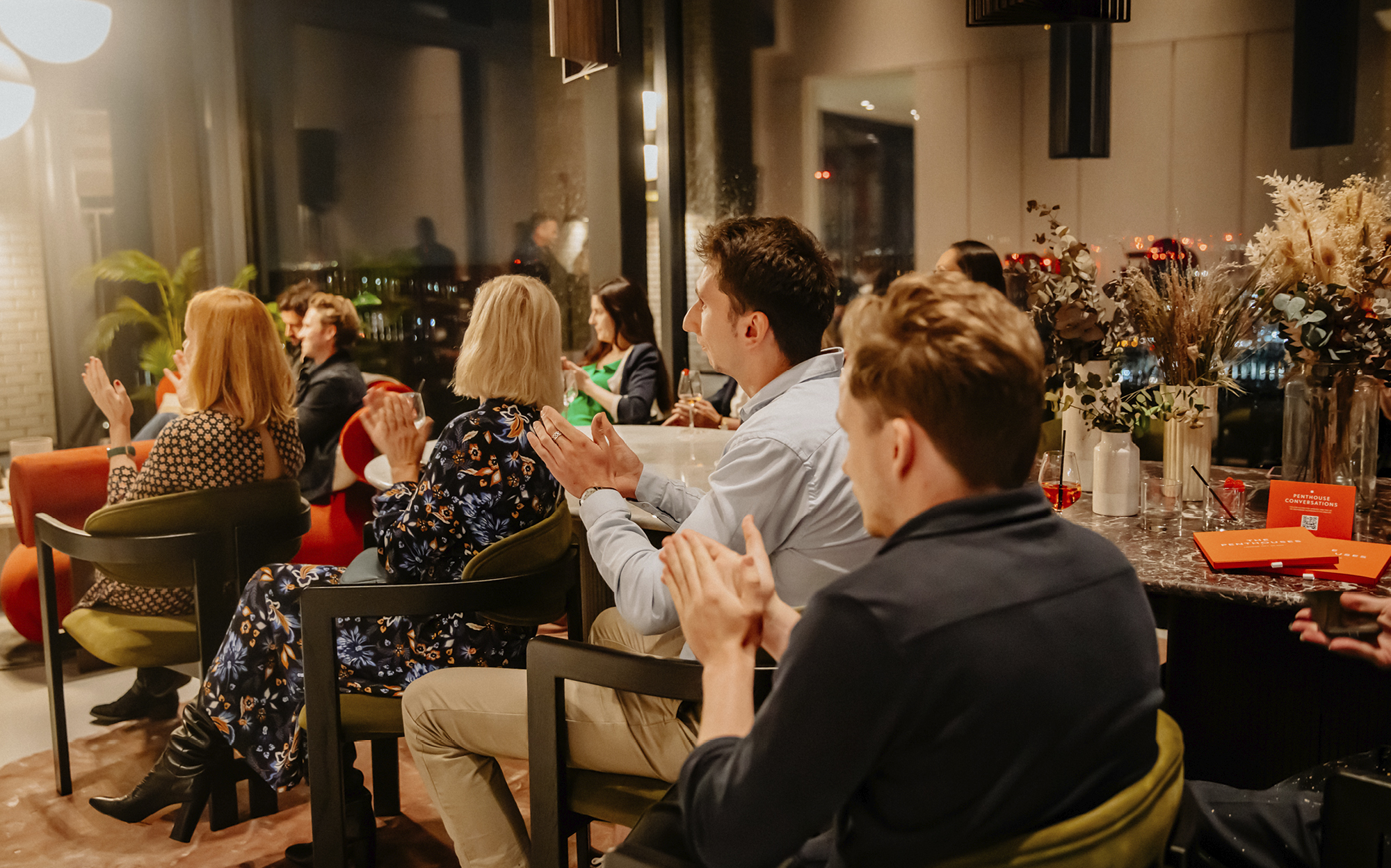
Audience members applaud the panelists, who seamlessly combined their varied knowledge and experiences for an engaging discussion
During the evening’s Q&A, Amati spoke with an anaesthetist in the audience about NHS staff having no access to hot meals on night shifts. She said research literature shows medical professionals are far more likely to make mistakes when they haven’t eaten properly. And few outside the NHS realise that medical staff working weekends and night shifts have access only to low-quality food, and “kitchens” comprising vending machines and microwaves; that hospital workers are essentially caring for the nation’s health sustained only by coffee and E-numbers.
