


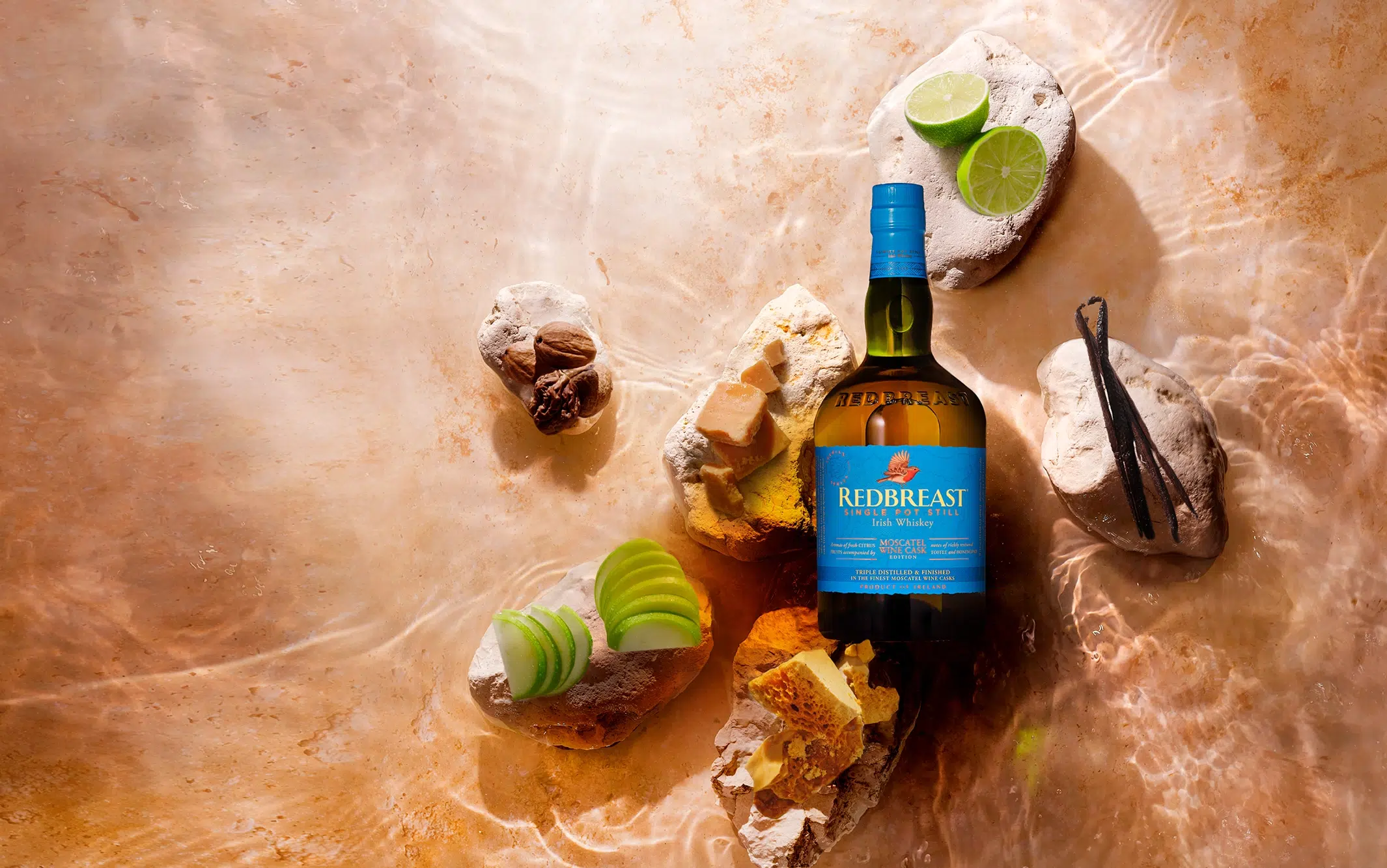
Despite its Spanish influence, the new Redbreast Moscatel Wine Cask Edition is a fine example of a style unique to Ireland: pot-still whiskey. We explore the history, the future and the best of them…
What to drink on St Patrick’s Day? It is not a time for green beer, and after a stout or two, you need to move on to the uisce beatha. But what’s the best Irish whiskey? There are single malts and blended whiskeys – both made in the island’s quirky way (Bushmills single malt is triple distilled, for example, instead of the Scottish double distillation). But pot-still is the uniquely Irish style at the heart of the nation’s whiskey culture (Irish blends such as Jameson use pot-still, not malt). So, what exactly is it?
Pot-still is made in the same style of stills as single malt – copper kettles that boil a beer to collect new-make spirit in batches. The difference is the recipe. Where malt whiskey (or whisky in Scotland) is made purely of malted barley, Irish pot-still whiskey starts with a mixed-grain mash bill, with unmalted barley as well as the malt, plus an allowance for other grains such as oats, wheat or rye.
If it sounds similar to American whiskeys such as bourbon or rye, there’s a reason: Irish emigration during the Great Famine in the 19th century, when pot-still Irish whiskey was popular around the world.
Alex Huskinson, one of the spirits experts at The Whisky Exchange, explains the difference in flavour: ‘The three big flavours I consistently get from malted barley in any whiskey are nuts, citrus and honey. Unmalted barley is much brighter and greener – spicy but very fresh spices, like green cardamom; oily but light like linseed oil; fruity, adding pears and green apples on top of peaches’.
All Irish whiskey declined in the 20th century but, as distilleries closed and amalgamated, two pure pot-still whiskeys survived – Redbreast and the Spot whiskeys – Green Spot, Red Spot etc, both produced at Irish Distillers’ Midleton distillery. Although they have slightly different ratios between malted and unmalted barley (Redbreast is roughly 50:50, while the Spots are 60:40 in favour of malted barley), neither uses any other grain.
Unsurprisingly, as Irish Distillers was the most significant pot-still whiskey maker in 2014, when rules governing its production were belatedly drawn up, they reflected the recipes for Redbreast and Spot. The mash bill for a pot-still whiskey must include a minimum of 30 per cent malted barley (never peated); a minimum of 30 per cent unmalted barley; and, notably, a maximum of 5 per cent other grains.
Not long after the rules were set, an Irish whiskey boom saw new distilleries open that would want to break them. Boann in Meath and Blackwater in Waterford are making Irish whiskey with mixed-mash bills featuring oats and rye in higher proportion than the rules allow, so they cannot be labelled “pure pot-still Irish whiskey”. Huskinson says, ‘It means there is even more diversity of flavour. Rye adds warm spices; oats accentuate the nuttiness a little bit, but they do more for texture, adding creaminess.’
Although non-compliant, these are mash bills that have precedents in the 19th century, so there is a strong movement to amend the rules to allow more variety. Irish Distillers are not standing in the way of the amendment, so this should happen fairly soon. In the meantime, they are available, just without the ‘pot still’ label. Here are our current favourites, for a genuinely Irish St Patrick’s Day celebration…
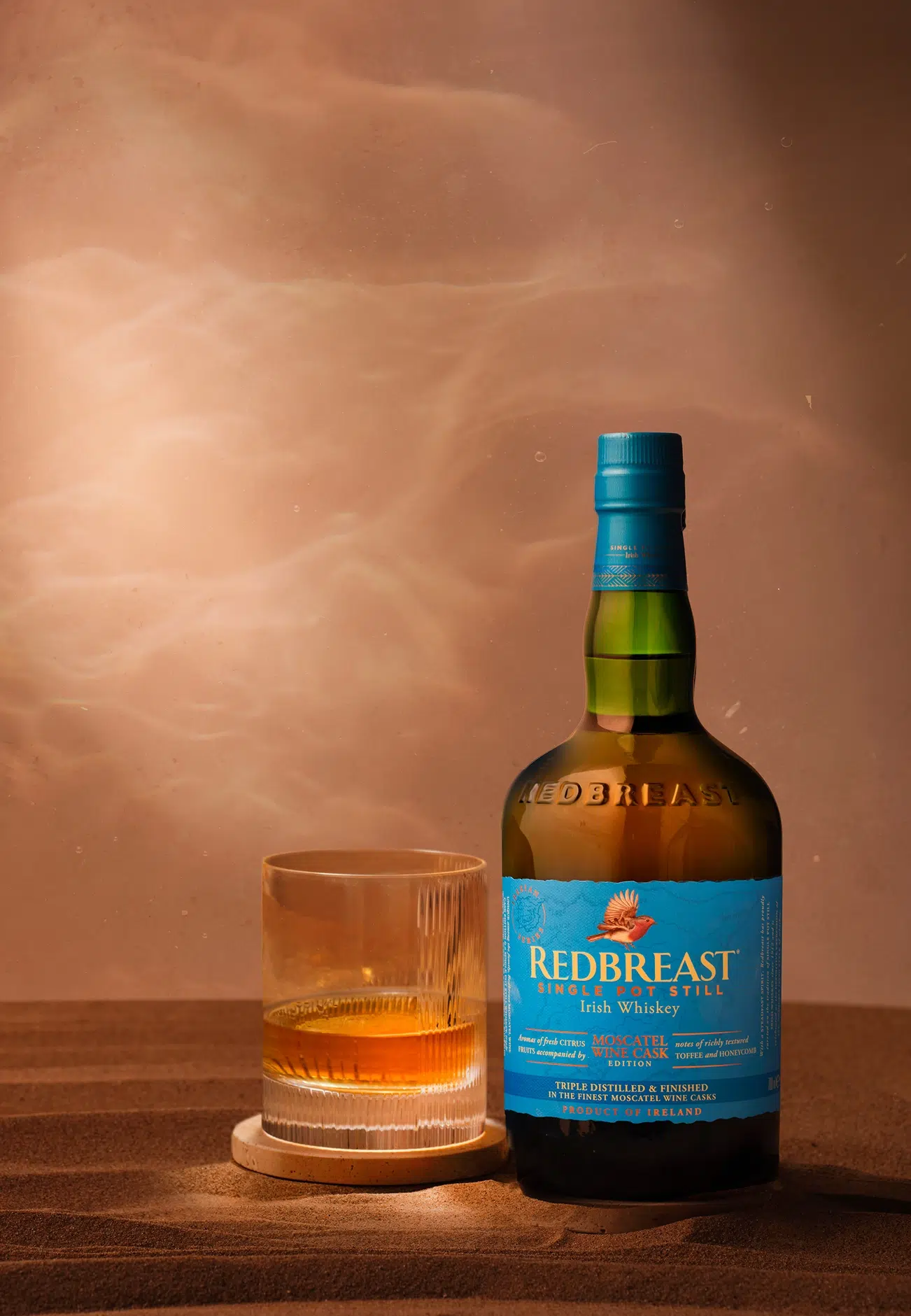
Redbreast Single Pot Still Irish Whiskey, Moscatel Wine Cask Edition
The latest in Redbreast’s Iberian Series sees master blender David McCabe marry pot-still whiskey aged in ex-American whiskey and ex-oloroso casks and finish them for a chunky 16 months in Málaga moscatel casks specifically seasoned for the task at Bodegas Quitapenas. There are green wood and chamomile tea notes, orange peel (citrus character, from lemon to orange marmalade gives a clue to age – this is non-age-statement but is minimum 9YO), and creamy vanilla fudge, toffee and floral honey, with a crack of black pepper and cloves.
46% ABV; £85; redbreastwhiskey.com
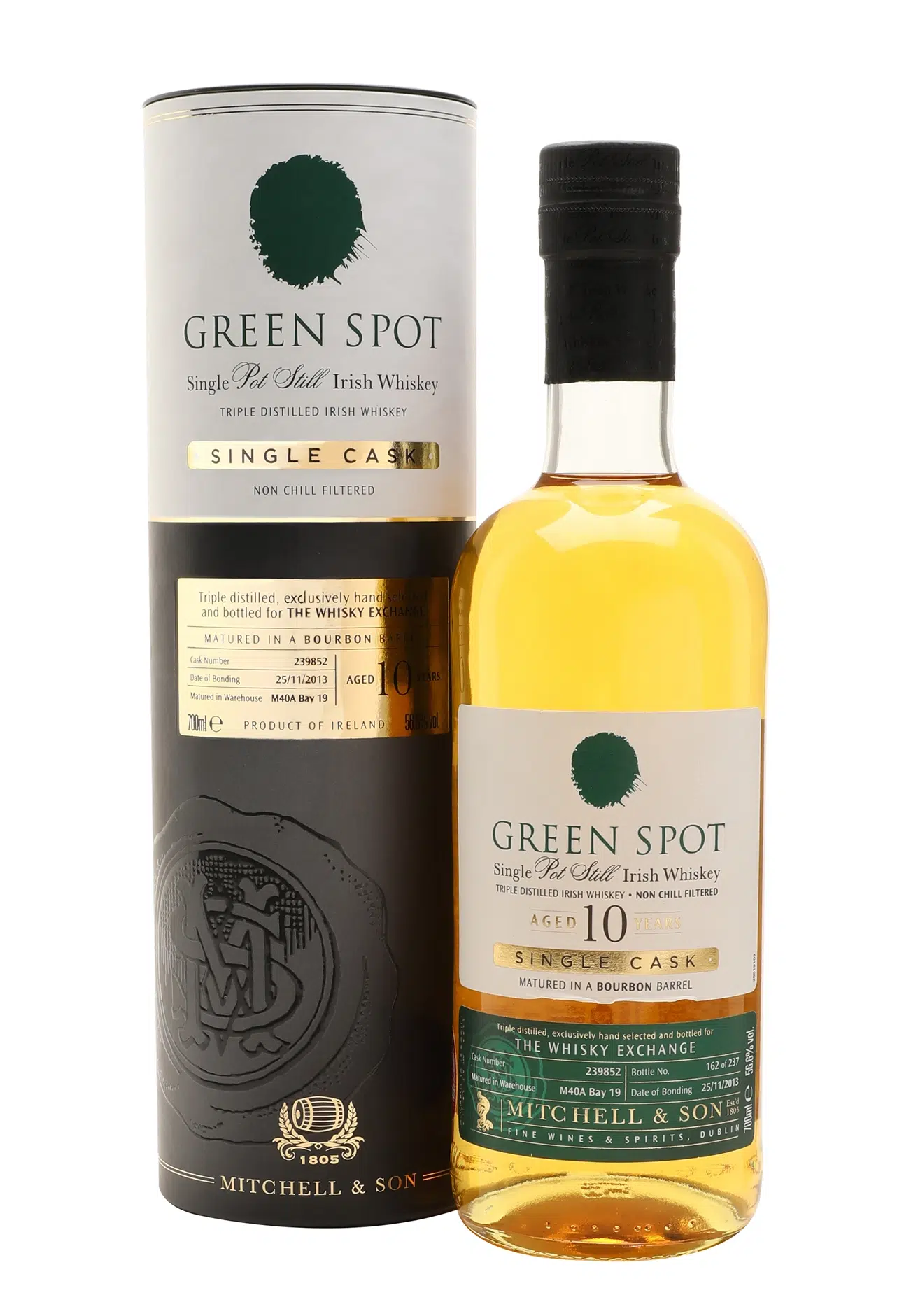
Green Spot Single Pot-Still Irish Whiskey, 2013 Single Bourbon Cask
Mitchell & Son had a simple device for keeping a record of its casks at a glance – a different-coloured paint splodge on the cask head to indicate age. A green spot meant 10 years old. Normal Green Spot is married (with Dave McCabe the presiding priest again) between ex-bourbon and ex-sherry casks. This exclusive is bottled (at cask strength) directly from one of the ex-bourbon casks selected alone. It is the purest of pure pot-still – a range of citrus, from lemon sherbert to tangerine; apple pie, nectarines and pears; cinnamon-topped vanilla custard tarts.
56.6%; £140; exclusive to The Whisky Exchange; spotwhiskey.com
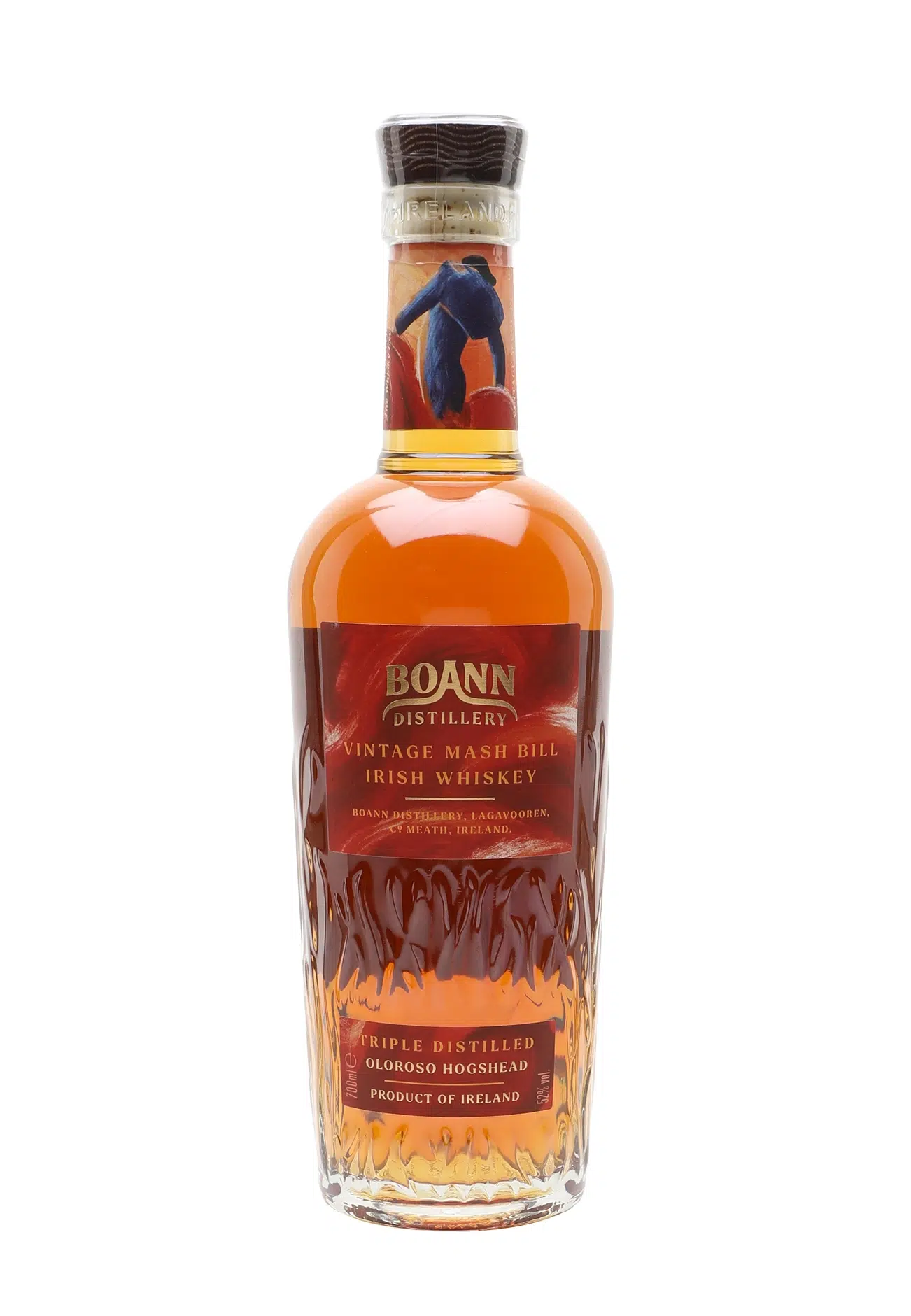
Boann 2021 Oloroso Hogshead #21001 Vintage Mash Bill
This is, frankly, a ridiculous whiskey. It should not be this complex at just four years old (it was bottled in 2025). But it originates from a rebel mashbill – 40 per cent unmalted barley, 30 per cent malted barley and 30 per cent oats – and proves the point that pot-still whiskey offers so much quality, even if (perhaps, especially if) the rules are relaxed. Its complexity belies its age, with notes of orange peel, pear drops, soda bread and hints of orange blossom, leading to pineapple mingling with ginger biscuits.
52%; £110; exclusive to The Whisky Exchange; boanndistillery.ie
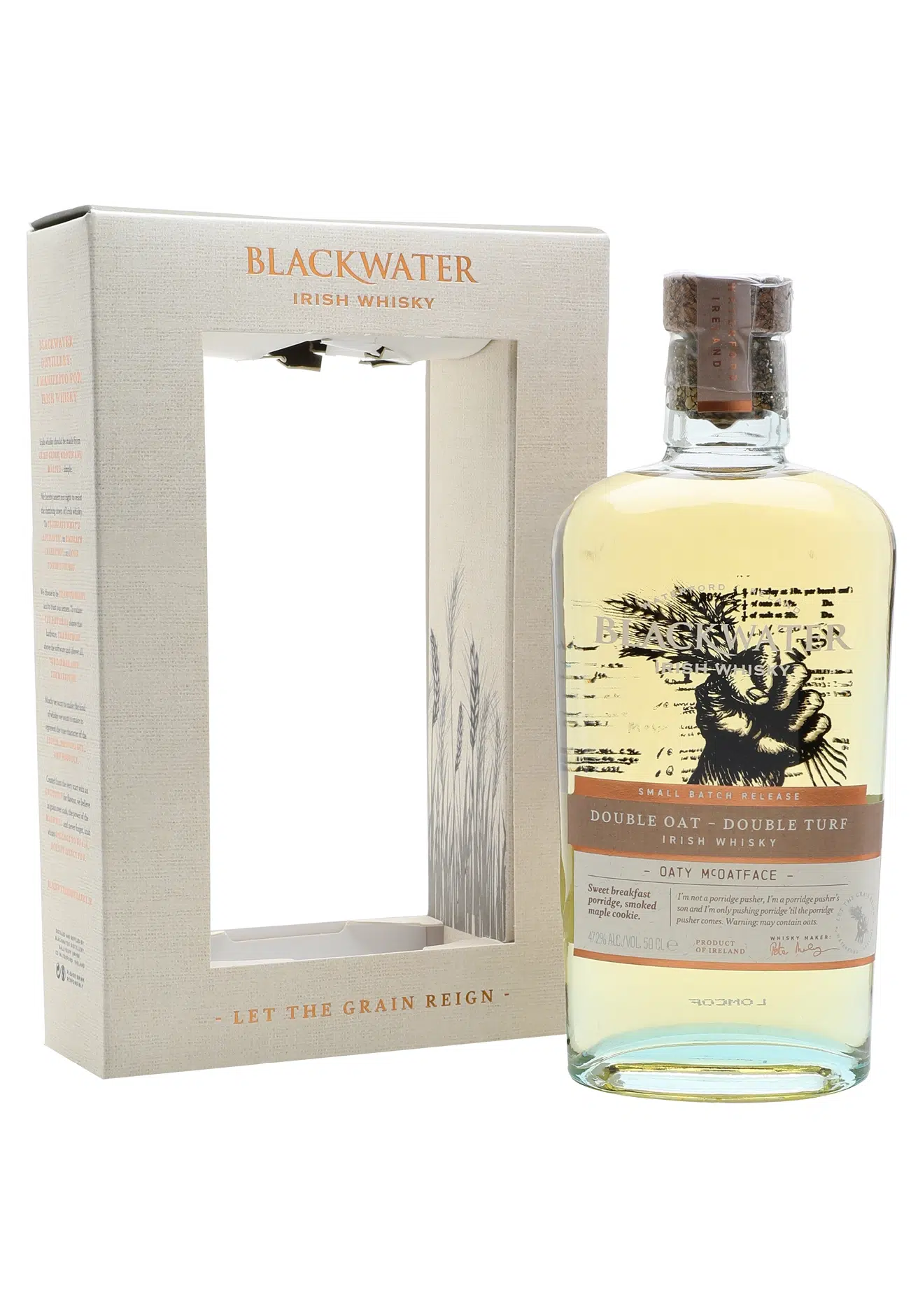
Blackwater Oaty McOatface Small-Batch Release
This is a non-compliant pot-still that goes beyond the pale in not one way (with a 24 per cent malted oat element) but two… it includes 5 per cent turf-smoked malted barley and 4 per cent peated oats. (To round out the maths, it also comprises 50 per cent unpeated malted barley; 12 per cent raw barley and 5 per cent rye). It is aged in cognac and maple barrels (that’s only non-compliant if you’re Scottish – Irish whiskey can age in woods other than oak). The result is the adult equivalent of eating porridge by the fire in an Irish holiday cottage when your mum let you have brown sugar and raisins in it.
47.2%; £92.95; blackwaterdistillery.ie
