


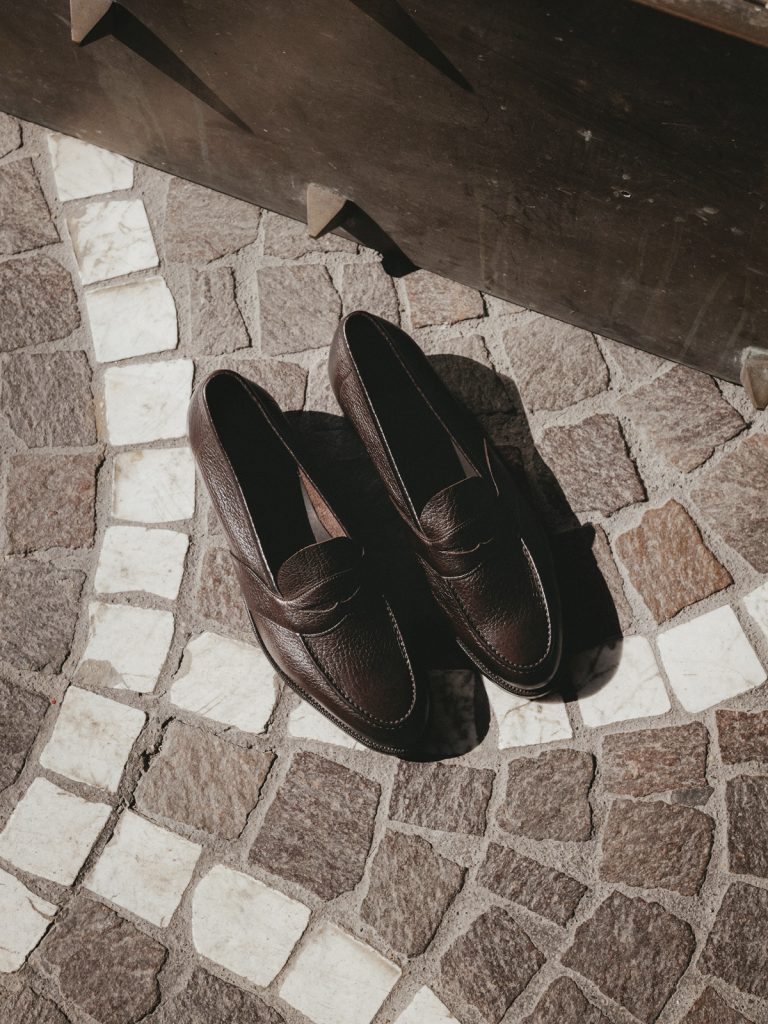
The humble penny loafer has enjoyed something of a renaissance over the past few years. A decade or so ago, the classic slip-on was still the reserve of finance guys and preppy-devotees, but as the menswear world has emerged into a “post-sneaker” landscape (as per men’s style podcast, Throwing Fits), the likes of the penny – and the derby, the chunky Chelsea boot, the leather sandal, even the rubber clog – have seen their star rise. And few places make penny loafers like Edward Green.
‘Loafers are ubiquitous these days,’ says the Northampton shoemaker’s head of brand, Euan Denholm. ‘Highly versatile and straddling different levels of formality.’ For Spring/Summer 25, Edward Green has just unveiled a new loafer, the Pimlico, which looks to match the classic penny to the rigors of modern style. ‘We wanted a slightly rounder alternative to our classic almond 184 last,’ says Denholm, ‘and we also wanted to inform the new last with data on the changing shapes of today’s feet so we could optimise comfort and fit.’
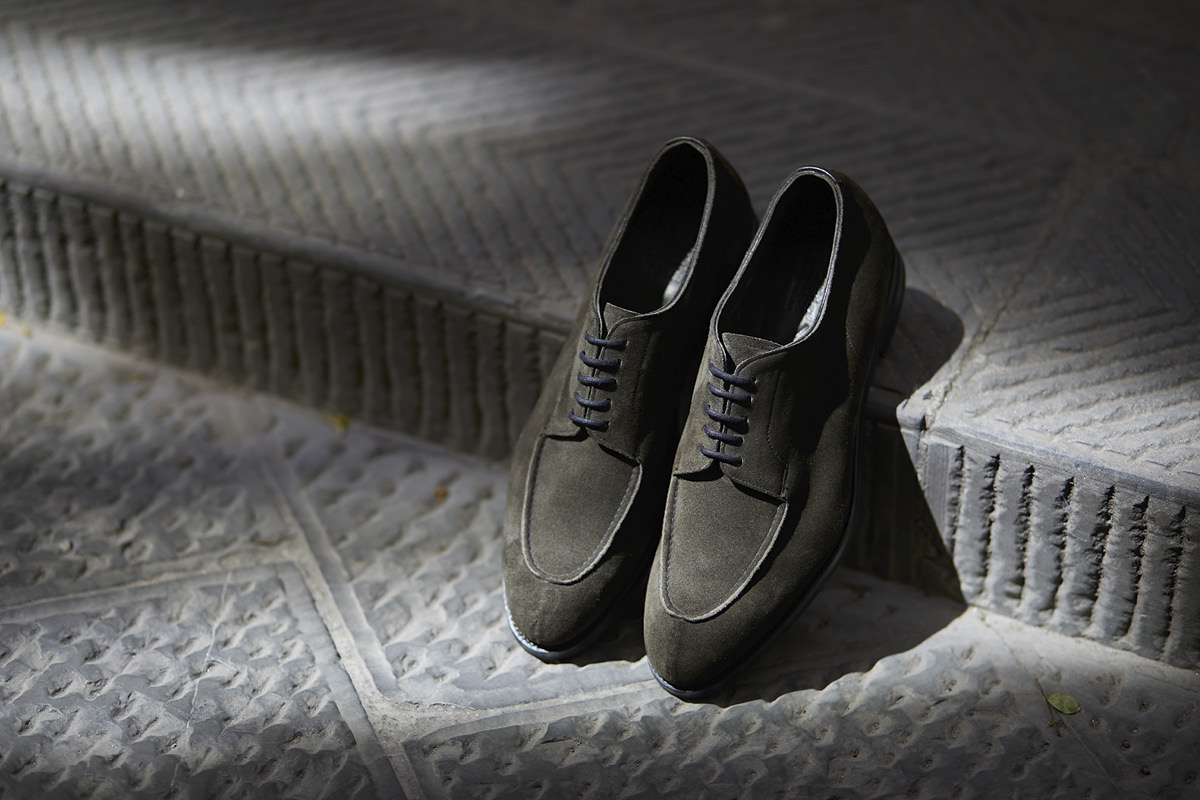
The Pimlico is also indicative of Edward Green’s dedication to craft. Established in 1890, the brand’s founding motto was “excellence without compromise” and that credo sustains. Shoes – around 350 pairs a week – are still made by hand, by a small group of artisans, in the Northampton factory. Many of which are still hand-sewn. ‘Hand-sewing is a very intricate technique which we still use for a select group of shoes,’ says Denholm, ‘including our signature Dover style,’ a split-toe derby with a U-shaped apron across the front of the shoe. ‘Something of a speciality of ours,’ he adds, and especially popular in Japan.
Made by just two hand-sewers at the factory, who use a traditional awl and a boar bristle, the Dover takes two hours to sew per pair. ‘It makes for a very handsome shoe,’ says Denholm.
As the mercury rises, many swap out their traditional leather shoes for an unlined alternative, and the construction has become ‘crucial’ for Edward Green, explains Denholm. ‘Just as with a fine piece of unstructured tailoring, so with unlined shoes,’ he says, ‘the craftsmanship must be meticulous as everything is on view. We select soft but refined calfskins and work with “skeleton linings” to ensure that support is available in all the right places but not a millimetre more.’
Edward Green offers four different unlined loafers, the Piccadilly penny loafer on the almond 184 last; the Belgravia unlined, a braided tassel loafer on the 184; the Montpellier, a saddle loafer; and now the Pimlico, a penny loafer on the rounder 125 last. ‘Lined loafers still have their place,’ says Denholm, ‘often preferred for more formal polished calfskins which can be stiffer and benefit from a lining. But more often than not, unlined styles fit well with the way we live now.’
