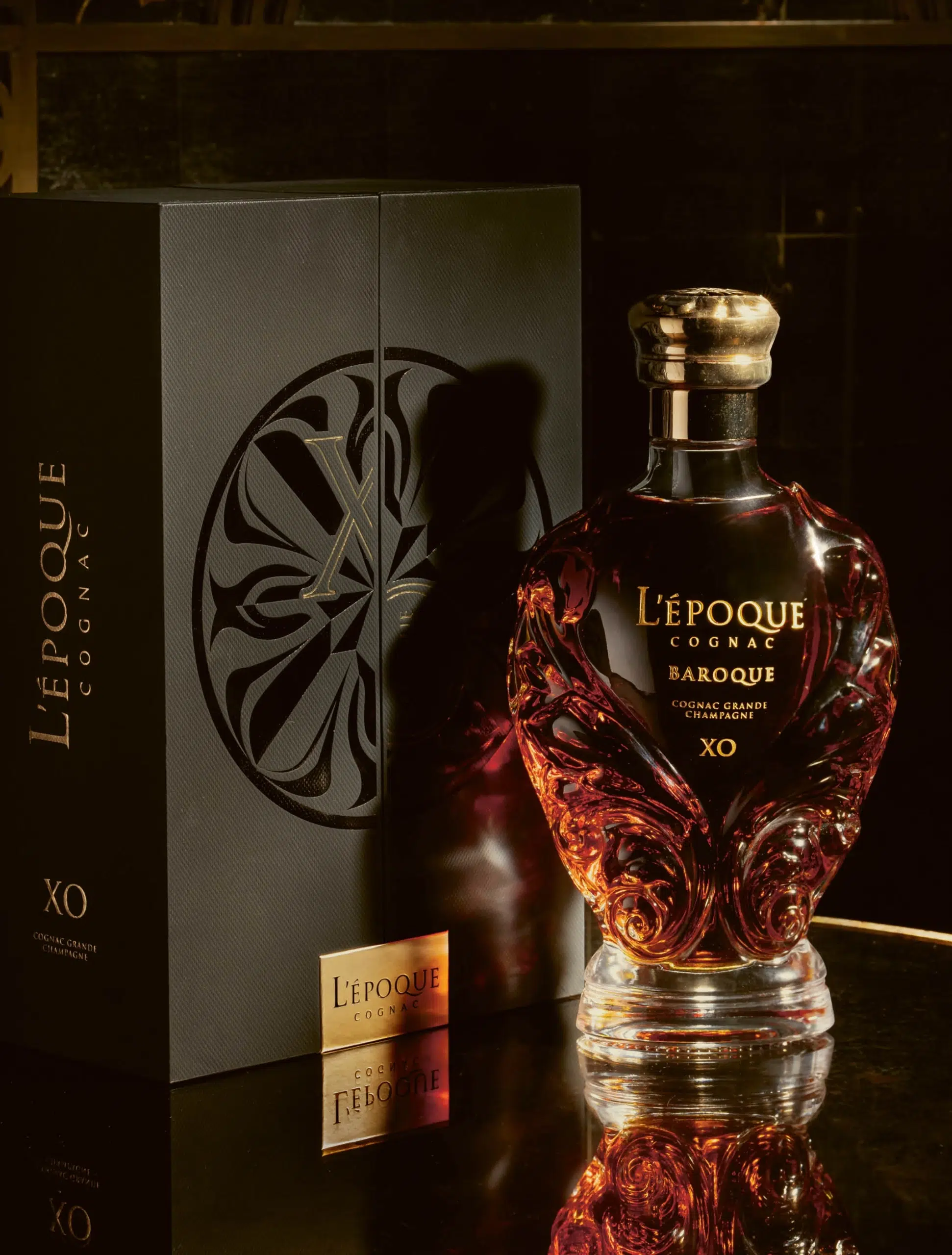
With a few houses historically dominating the brandy region, a new offering has to be something different – L’Époque Baroque is trying to do that with an XO that’s more than an XO
A new player has entered the game of luxurious cognac. Maison L’Époque has foundations in London as well as the Charente. It is the creation of Tatiana Kharchylava (creative director of The Birley Clubs, including responsibility for Annabel’s festive façades each year) and Yohann Pinol, former head sommelier of the Hakkasan Group and ex-Louis XIII private client director.
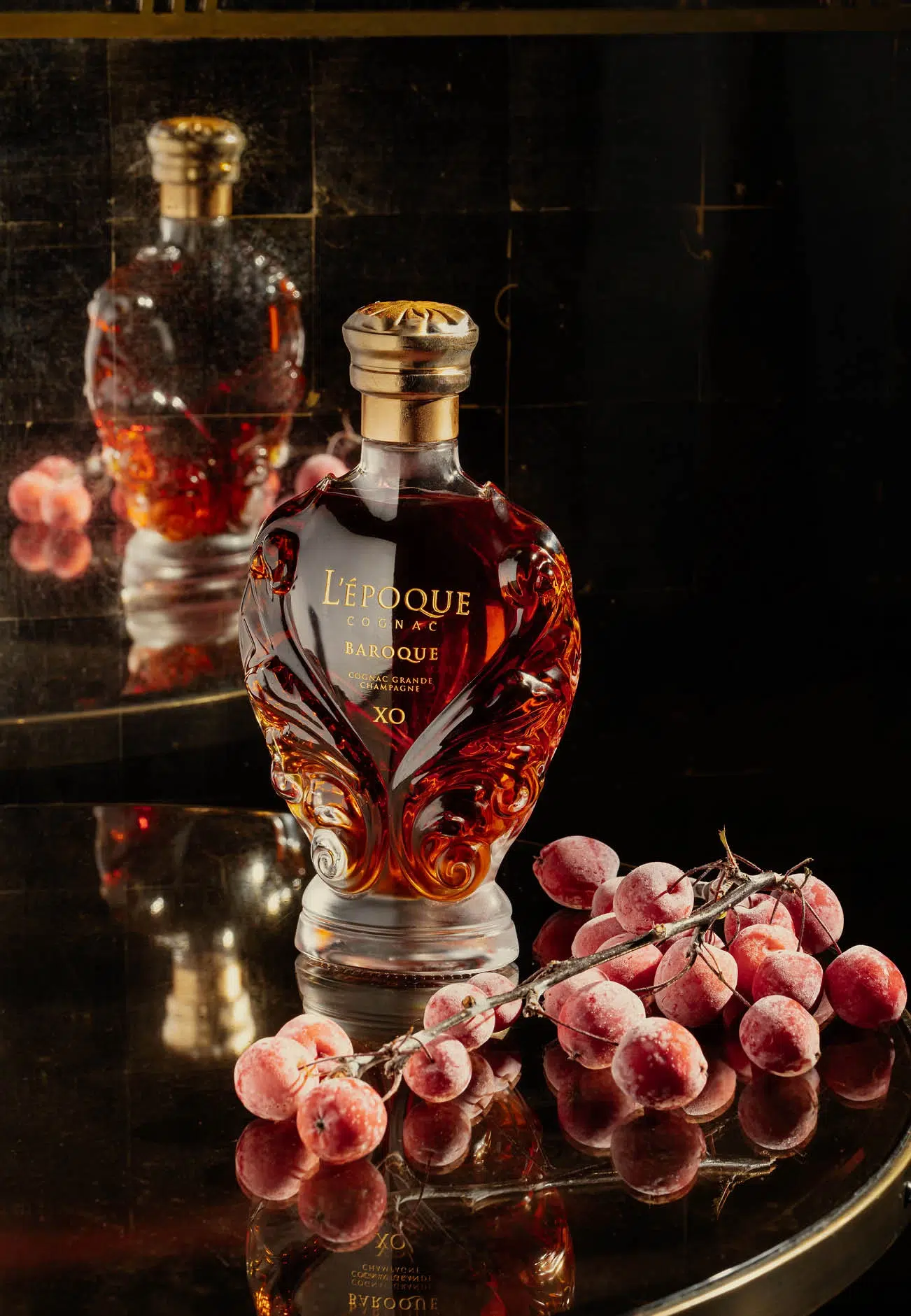
A plan to release decanters inspired by historic art movements begins with Baroque XO, contained in a seamless decanter that resembles an ornamental cartouche. For the container, Kharchylava says she was inspired by Bernini’s Ecstasy of Saint Teresa, which is displayed in a chapel in the church of Santa Maria della Vittoria in Rome that resembles a box that has opened up to reveal the statue on a pediment.
This rich, silken cognac is not all flourish and façade, though. It has already won gold at the Cognac Masters. Pinol has brought all of his understanding of wine and spirits to bear.
The mantra of the Charentais seems to be a simple one of ABC – always blending cognac. Certain casks are treated as vintages and are locked away in a part of a cellar known as a paradis, to which the owners don’t even have the key – it can only be opened by an official from the Bureau National Interprofessionnel du Cognac – un flic from the BNIC, if you will. Everything else is created by blending eaux de vie. Then blending blends and blending blends of blends.
That can mean combining eaux de vie from different vineyards, different distillers, different crus (the wine-style divisions within the appellation – Grande Champagne, Petite Champagne, Borderies, Fins Bois, Bons Bois and Bois Ordinaires), before you even get to blending ages.
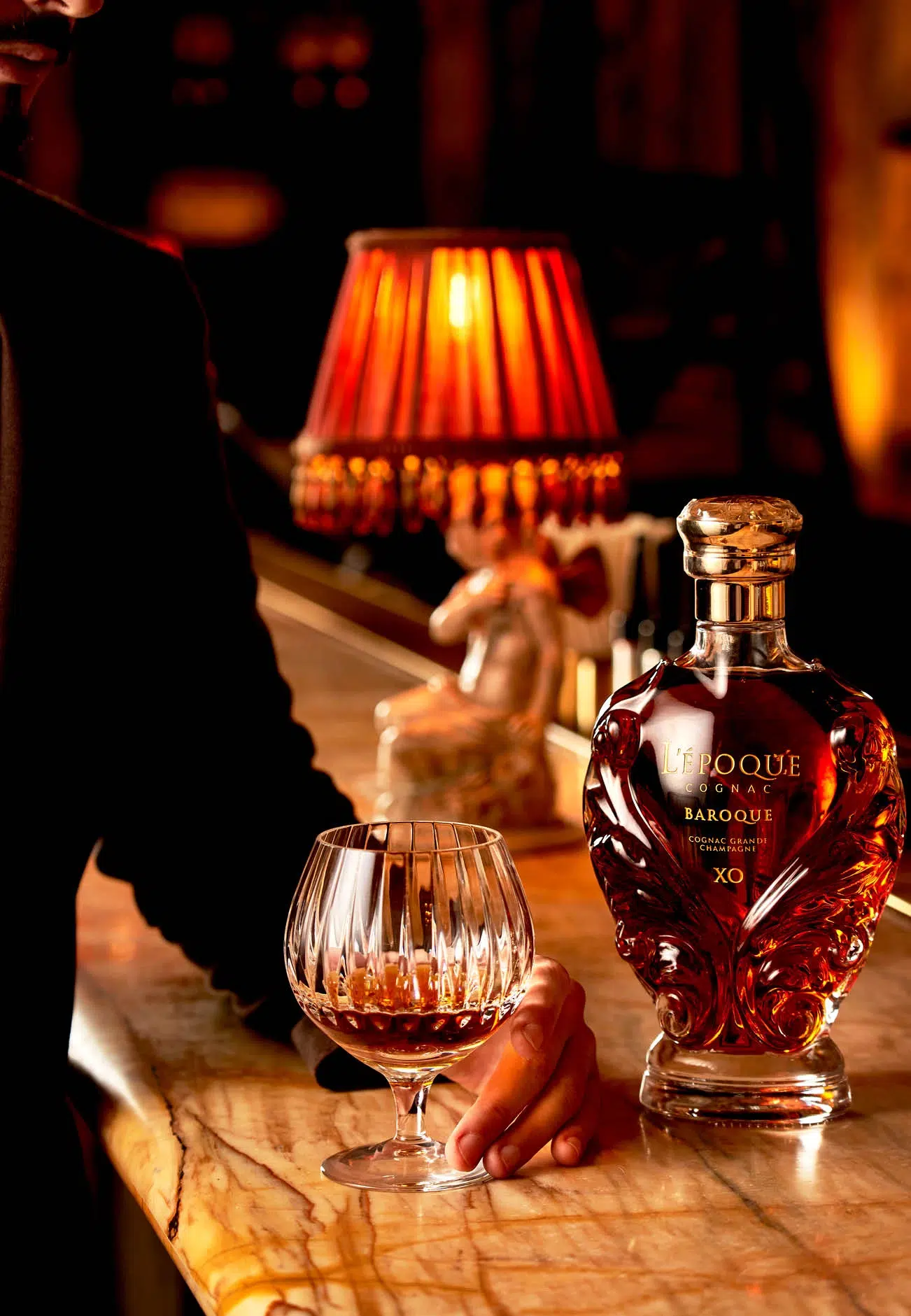
For L’Époque Baroque XO, Pinol has selected eaux de vie from a single estate in Grande Champagne (nothing to do with the sparkling wine appellation; they both have soil that reminded Roman legionaries of Campania). The selection is unsurprising, given his previous relationship with what he refers to coyly as ‘the spiky bottle’, referring to the embellishment on a decanter of Louis XIII. Often referred to as the top cru (although the hipsters’ choice is Borderies, with its intense floral aromas), Grande Champagne has finesse and is built to last.
It’s not a cru that works well in a VSOP – it comes into its own after at least a decade. In fact, while 10 years of ageing on the youngest element in the blend is enough to classify it as an XO, Baroque has nothing in it younger than 20. There could be a suspicion that L’Époque is trying to be an affordable substitute for the spiky bottle, which is an hors d’âge (with no official minimum age, but in Louis XIII’s case is minimum 40 and contains eaux de vie beyond a century old). It’s priced at a tenth of the price Pinol was asking for his previous employer, but around twice the ticket on the leading houses’ XOs (which often have a drop of something very old but are mostly made up of eaux de vie between 10 and 30 years old).
So, the pricing seems fair – if cognac had whisky’s age statement system, 20YO would contrast more obviously with something like a 12YO. But Pinol insists, ‘It’s not something we did deliberately. We were blind tasting and the only consideration we had was to find the best eaux de vie and to create the best expression of an XO we could create – not try to compete with something else’.
I have tasted (and, more importantly, nosed) the four components which were finally chosen to be blended further to create L’Époque – all of them good enough to be bottled themselves. The younger (albeit not that young) eaux de vie have delicate floral notes – jasmine, orchard blossoms carrying a hint of fruit; the older, including a component over 50 years old, provide depth – rich cooked fruits, nuttiness and leathery dry notes, flashes of candied orange and ginger, violet, dark cherry and mint, with notes of leather, white pepper and spices.
It might seem sacrilege to turn this XO towards a mixing glass, especially as there is also a VSOP (under the name Avant Garde) being readied for bartenders, but Pinol has done it himself, so why argue… It gives real complexity to a vesper (with a pineau des Charentes rinse, a splash of L’Époque in with the vodka and gin, and a L’Époque-soaked raisin as garnish); and it adds depth to a vieux carré (equal parts XO cognac, rye whiskey and sweet vermouth, a teaspoon of Bénédictine – preferably vintage – and dashes of bitters).
Both Pinol and Kharchylava drop hints of another expression in the offing – likely an hors d’âge – but won’t reveal the art movement represented. It probably won’t have a spiky bottle, though.
£360; maison-lepoque.com