


Like people, rum can take many forms and some of them are easier to love than others. There are the conventionally attractive Cubans, all luscious and sinuous of hip, or the funky, offbeat Jamaicans. And then there are the stinky French…
Cheap gag, certainly, but there is a reason rhum agricole, the style made from cane juice, not molasses, that is peculiar to the French Caribbean, is not as popular as those crowd-pleasers from neighbouring islands. They have some very distinctive aromas – overripe fruit and petrol, for example – which can turn the uninitiated off. At the recent Whisky Exchange Rum Show, I stumbled (not literally) across a stand staffed by one of the specialist spirits retailer’s experts Alex Huskinson, who has made it his mission to convert us to the way of the cane.
First, he explains what rhum agricole actually is: ‘It’s a sub-category of rum that mostly comes from the French Antilles islands of Martinique and Guadeloupe. They are actually départements of France. In fact, while rhum agricole in general is an EU-recognised product of geographical indication, rhum agricole de Martinique has an Appellation d’Origine Controlée in the same way as, say, saint-émilion wine or cognac brandy. There are pages of regulations governing its production and even the GI stuff has a lot of rules, but the key is that it must be made from pure cane juice. That’s why it’s called agricole – it’s straight from the fields; in contrast to molasses rum, which is regarded as “industrial” because it’s a byproduct of sugar refineries.’
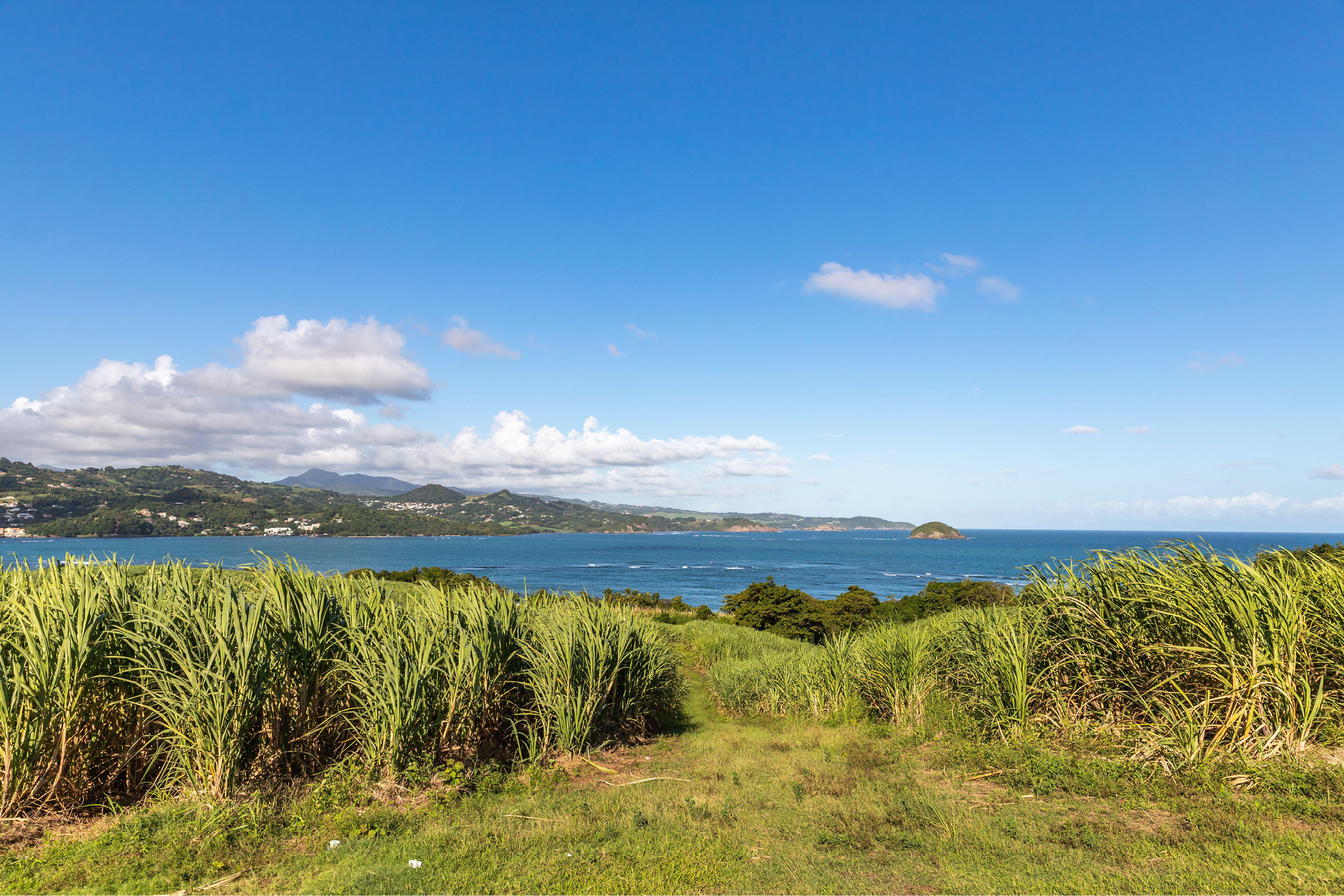
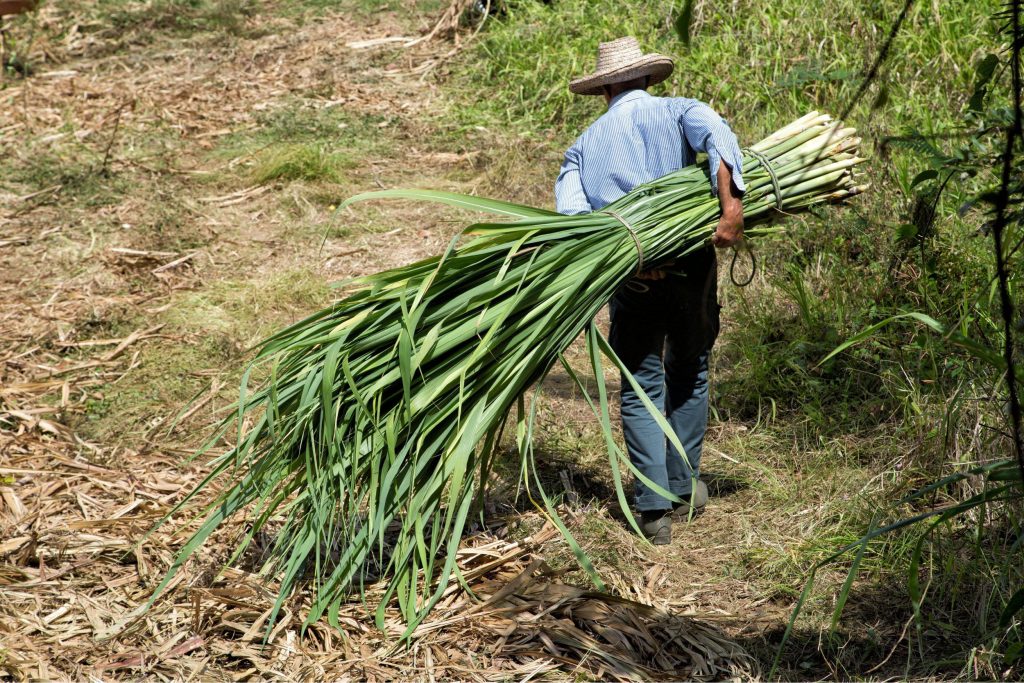
Huskinson continues, ‘When you refine sugar cane completely, you produce something that is essentially flavourless – it simply tastes sweet – but you are left with a gloopy, cooked residue that can be fermented (albeit it needs to be diluted first) and distilled. Because it’s already cooked, you get the classic toffee, caramel, treacle flavours of molasses-based rum. But if you go back to the sugar cane, it is a grass. A bloody big grass, like a bamboo, but a grass nonetheless. And when you press it, it produces a juice that is, yes, sweet, but also has this freshly cut, vegetal, herbal character to it.’
It’s this freshness that agricole producers are trying to harness, Huskinson explains. Molasses is sometimes shipped around the Caribbean to islands with less ability to grow the crop, or even as far away as Scotland. Sugar cane must usually be juiced and ready for fermentation within two days of harvesting (depending on the local rules), then fermentation is in sealed tanks using proprietary yeasts (ie not open to natural fermentation with environmental yeasts) and for a relatively short time – often as little as 48 hours.
The story behind why these particular countries went with cane juice as their, literally, raw material is intriguing. Why would Martinique and Guadeloupe not do the financially efficient thing and produce both refined sugar and a spirit made from the byproduct? Huskinson says, ‘I’ve tried to piece together the history and there are various parts that loosely connect… the thing is, both islands had a thriving sugar export industry and made molasses-based rum. In the 19th century, possibly because phylloxera was threatening winemakers, cognac producers and so on, France put tariffs on imported rum, including from its own territories. Around the same time, sugar beet became a popular domestic crop and sugar prices went through the floor as it could be produced cheaply in mainland France. Then, in 1902, a volcanic eruption destroyed some distilleries, and that was followed the next year by a hurricane that wiped out cane crops, and a large earthquake in 1906. So, both the sugar and rum industries were devastated. There continued to be some molasses-based rum production for export but, for most distilleries, it was for the local market, and they used cane juice because why go through an extra process? It wasn’t until the 1950s and ’60s that the French cognoscenti began to get excited about agricole and it became “a thing”.’
That “thing” was all about those fresh-cut-grass aromas. And the preservation of that cane character continues past fermentation to the distillation. Huskinson continues: ‘The rule for Martinique agricole is that it can’t come off the still at higher than 75 per cent alcohol by volume. In Guadeloupe, it’s 90 per cent, but the best producers there don’t go near that number. In fact, in Martinique, it often comes off the stills at closer to 65 per cent. They use column stills like some molasses rum producers do, but instead of producing a high-ABV spirit that’s pure and smooth, these messy “creole stills”, as they’re called, are inefficient, a bit like armagnac stills. The advantage is that they produce a spirit that’s lower in ABV but carries a lot of flavour through, as well as a lovely mouthfeel, thick and almost chalky…’
He’s right – there’s almost a milk of magnesia or Gaviscon liquid quality to many of the samples. However, the first thing most people will experience with a rhum agricole is that aroma. And, for many, it can be hard to get past either the overripe fruit or the petrol notes. The ungenerous might say it smells like a fox has dragged a food waste bin to tip it out in a nearby Shell forecourt.
Huskinson leaps to these “off” aromas’ defence: ‘There are a lot of drinks that have a weird smell that are absolutely delicious. Petrol is often a nosing note on riesling wine, and sherry has an aroma that is often called “rancio” but essentially smells mouldy. If you like mezcal, then you like the vegetal and herbal notes that you’re going to pick up. And that overripe fruit aroma is basically the smell of fermentation… it’s typical of anything with a high level of esters, be it cider, IPA, certain whiskies or, more relevantly, the funkier Jamaican rums. Look, if it just tasted like petrol smell or a fruit and veg market at closing time, it wouldn’t work, but it’s the combination of flavours that make it delicious.’
For the sceptic to begin to appreciate rhum agricole, they need to be careful where they start. ‘It’s like any spirit category – don’t start with the extreme. The first smoky whisky I ever tasted was Laphroaig. I hated it and thought I must hate smoky whiskies. But later, I tried a Talisker, loved it, and began to appreciate how the smoke integrated with other flavours. I went back to the Laphroaig with more of a context and understanding of the spectrum, and loved it.’
Huskinson has suggested an agricole journey to ease yourself into it, below, and points out that in The Whisky Exchange’s bricks-and-mortar shops, samples of most spirits are usually available. He also suggests trying it in cocktails, to shift yourself gently in the direction of agricole. ‘The classic agricole cocktail is rhum with limes and cane syrup – they often just lay out the ingredients in front of you and let you make it yourself. But try it in a daiquiri. Let’s be honest, a three-year-old Cuban rum gets a little lost in a daiquiri, whereas with an agricole, or half-and-half, you get so much more complexity.’
The agricole agenda
Clément Canne Bleu (50%, £40.25) – ‘This is considered the most elegant, refined of the unaged agricoles. It’s a single varietal, ie made from one variety of cane – canne bleu. The variety of cane is not something you could detect with a molasses rum because it’s been through too many processes, but you often can with agricole, because they’re trying to capture that raw cane juice character. This has tropical fruit notes, really ripe papaya and mango, as well as that classic grassy note.’
Trois Rivières Cuvée de L’Ocean (42%, £48.25) – ‘This is where terroir comes into things… the cane for this rum is grown right on the Atlantic shore and you can detect a sort of ozone, seashell note to it. But there’s also a touch of liquorice – the original root, not Allsorts – to it.’
Le Rhum Agricole Blanc Par Neisson (52.5%, £42.25) – ‘Neisson is the hipster’s choice. It’s a small, family-owned distillery that has been running since the 1930s. It’s bottled at a slightly higher ABV and is slightly more challenging unless you have tasted one of the previous two. It has that petrol smell and the overripe fruit and veg character, but as you’ve got used to that, you’ll also pick up mint, spices and especially aniseed. It’s also a little astringent, drying on the tongue, which makes it quite moreish.’
Transcontinental Rum Line French West Indies VO (46%, £54.25) – ‘Now, we start moving into the aged agricoles. This is where, like any spirit, the wood ageing smooths off some of the original distillation character. This is an independent bottling, which had three years of fast tropical ageing, before a period of around 18 months’ more mellow “continental” ageing in Europe, some of it in ex-cognac casks. It flows between the grassy and the spicy – like a rye whiskey – and between those petrol aromas and more nutty, milk-chocolate flavours.’
Tamosi Hiali Pere Labat (57.5%, £198) – This is the real specialist stuff. It’s another independent bottler, Tamosi, who really focuses on stories of the indigenous peoples of the Caribbean islands – Hiali is a character in the folklore of Guadeloupe, where the Père Labat distillery is located (rather, it’s on the island of Marie-Galante, part of Guadeloupe). It has been finished in a calvados cask and there is a hint of apple. You could do this with a molasses rum, but you wouldn’t have those weird notes popping out as you do with agricole.’
J Bally 2002 Millesime Agricole Rhum (43%, £103) – ‘This is the equivalent level of challenging in the aged category as the Niesson was in unaged. It’s a classic aged agricole that French people love – combining the tropical fruits with wood age… it’s roasted fruit and a hint of Bakelite, that old plastic smell.’ [Note from a sceptic – this was the toughest to be converted to!]
Engenhos de Norte 970 Madeira Wine Cask 2015 Rum (51.6%, £88.50) – ‘So, I said most rhum agricole comes from Martinique and Guadeloupe. This is from Madeira. A similar story – they traditionally grew cane there, but the sugar industry collapsed because of beet, so they started making agricole rum. It makes sense they should age it in Madeira casks, because of availability, but it also works together beautifully – that slight Madeira wine funk along with a full richness. It could be too sweet, but it isn’t – you have a really minty freshness to the end of each sip. Delicious.’
All these rhum agricoles are available at The Whisky Exchange shops on Great Portland Street, Bedford Street (Covent Garden) and Borough High Street (London Bridge), as well as online at thewhiskyexchange.com
