Opening to the public on 5 June, this year’s temporary commission is a winding brick wall designed to promote unity
It is a Wednesday morning in Hyde Park and, this being London, it is raining. A fat drop of rain plops down the back of my neck as I squelch up the artery-like paths jutting towards the Serpentine South Gallery and see a beautiful sight: an orange-brick shelter with gently curving walls and a canopy-like roof. Safety at last.
Of course, this is not just any shelter. It is the 2026 Serpentine Pavilion, one of the most prestigious architecture commissions in the country, as well as the setting for the Serpentine Summer Party – probably the hottest ticket in the British social calendar.
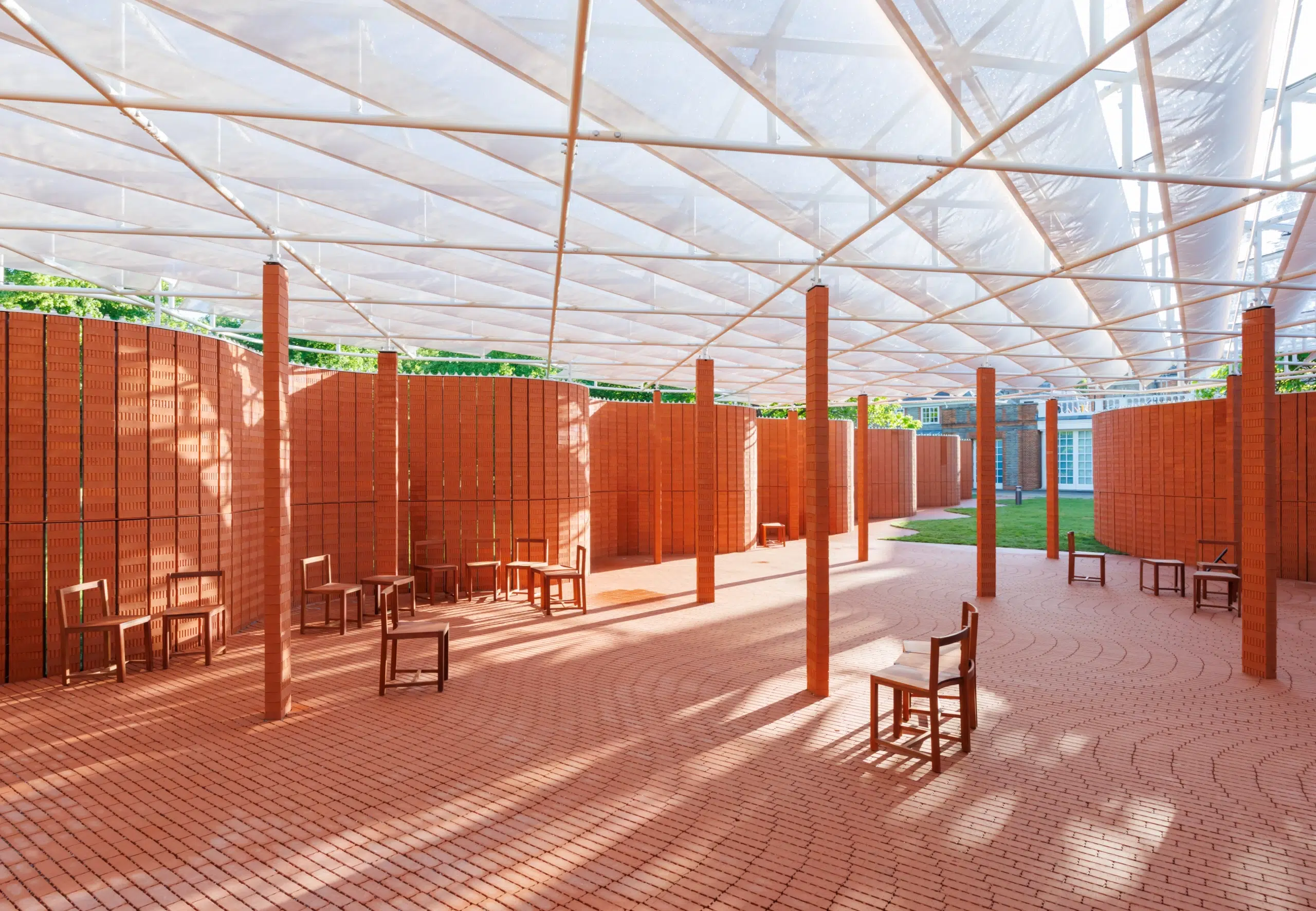
This year’s pavilion has been designed by Mexico City-based architecture studio Lanza Atelier. Their design is, quite literally, a serpentine: a “crinkle-crankle” – or, more plainly, wiggly – wall constructed from brick columns, topped with a translucent roof reminiscent of a tree canopy. It feels at once cossetting and open, both a shelter and a sculpture.
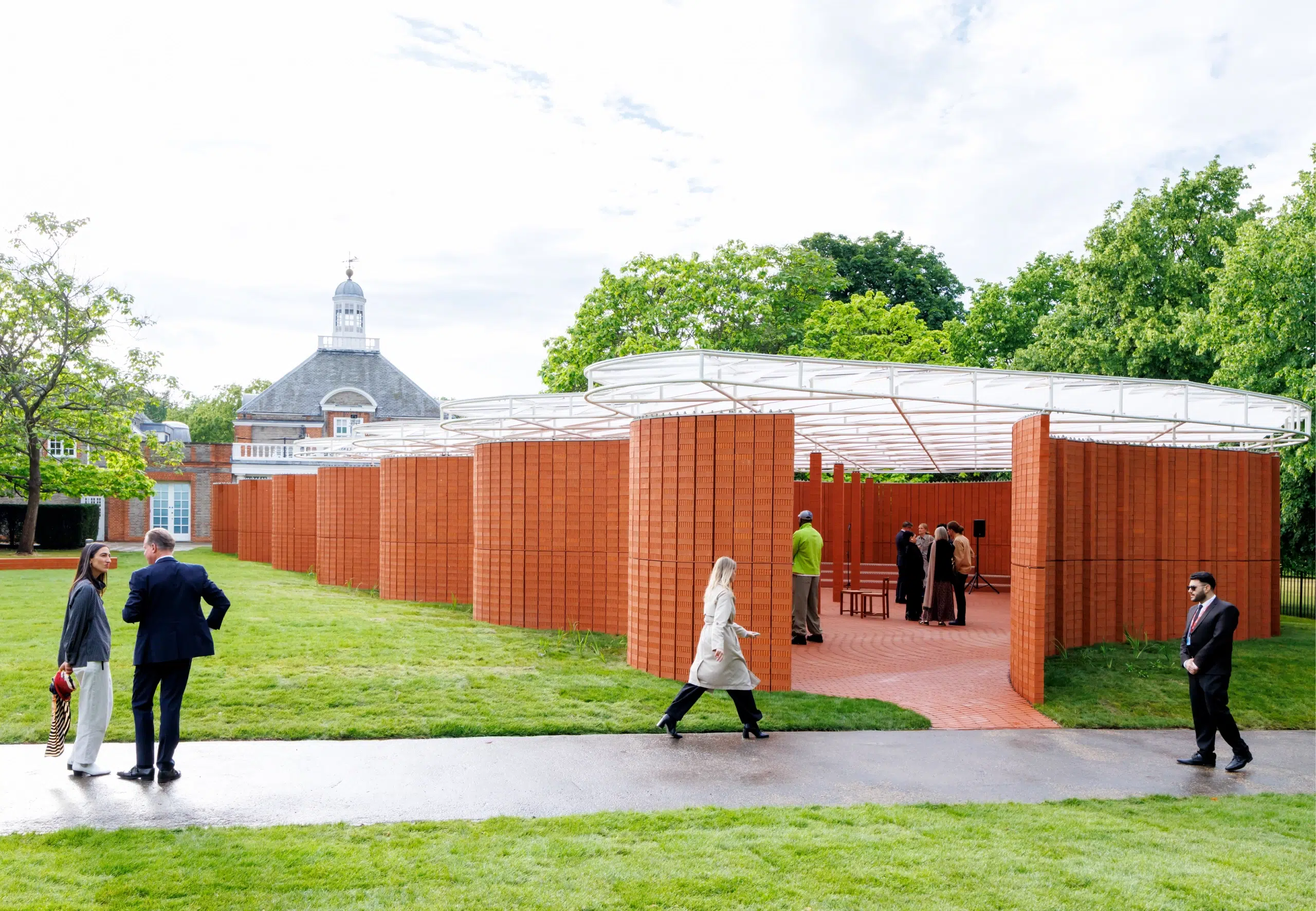
Serpentine Pavilion 2026 a serpentine, designed by Isabel Abascal and Alessandro Arienzo, LANZA atelier. Exterior view © LANZA atelier, Photo Iwan Baan, Courtesy Serpentine.
This type of wall is typically found in English gardens, built to run east to west to catch the southern light – which, as the architects explain, creates a microclimate that helps plants grow. Unlike most garden walls, however, there is a Rolex clock mounted on one side – the brand was announced as the Official Timepiece of the Serpentine Pavilion earlier this week.
It is also the first time brick has been used in a Serpentine Pavilion project. Each brick has been carefully placed with gaps on either side, transforming the wall from something solid into something you can see through. A symbol of division becomes a joining device: you can understand why that feels like a particularly pertinent message for the world right now.
‘I think there’s a moment of joy behind discovering it is made of bricks.’ I’m speaking with the architects behind the pavilion and co-founders of Lanza Atelier, Alessandro Arienzo and Isabel Abascal. The rain has driven us in, away from the Serpentine Gallery’s rooftop view of the undulating brick structure, and into a back room. They have a distinctly calm, measured presence – even though they both have “Serpentine” written across their nails.
‘It’s a very beautiful wall, and through geometry it manages to be very stable,’ Isabel continues, ‘but it is a material we love that comes from the earth.’
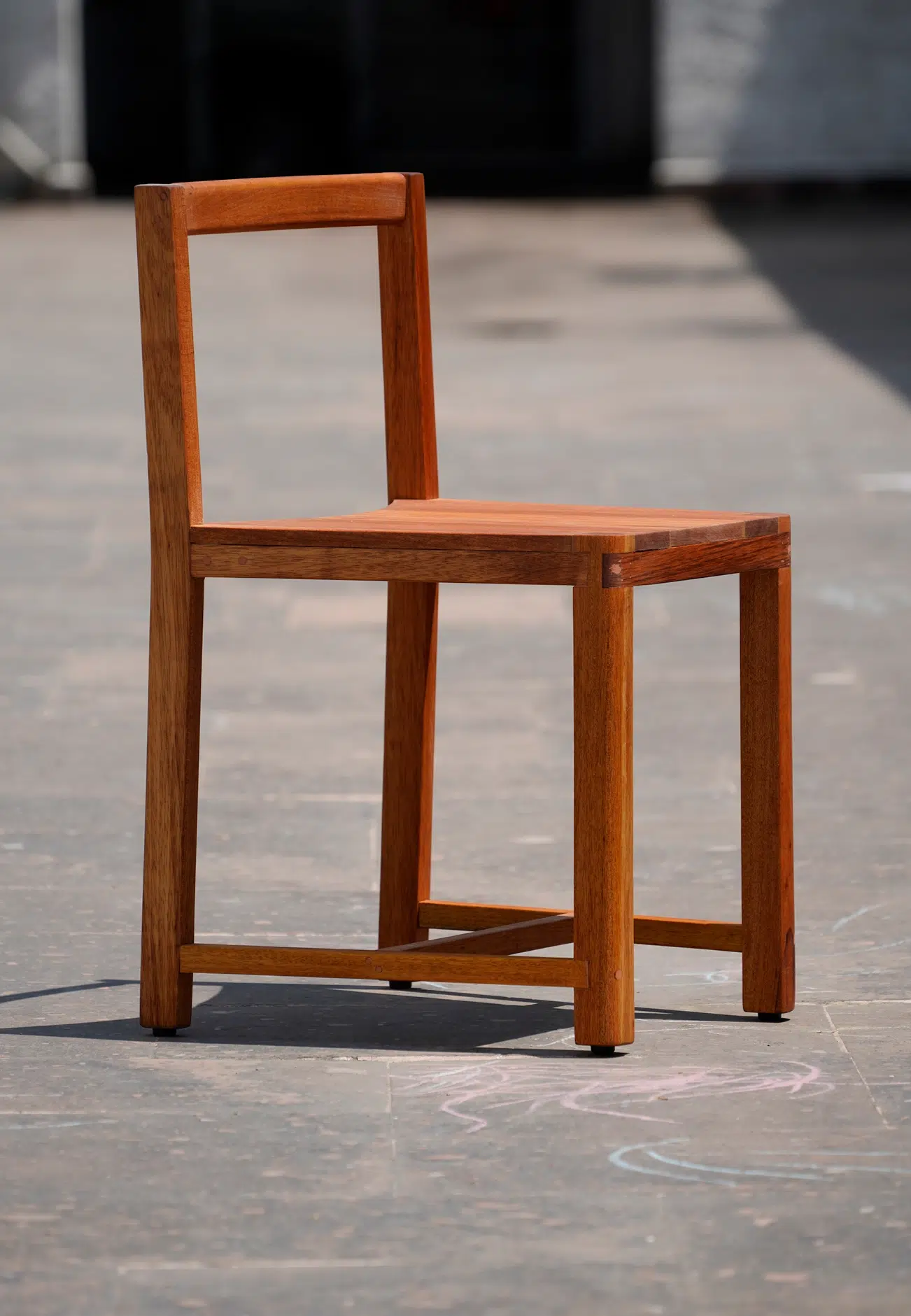
LANZA atelier, Chairs for 4 Couples Dining Set, 2020. Photo: Fernando Ocaña.
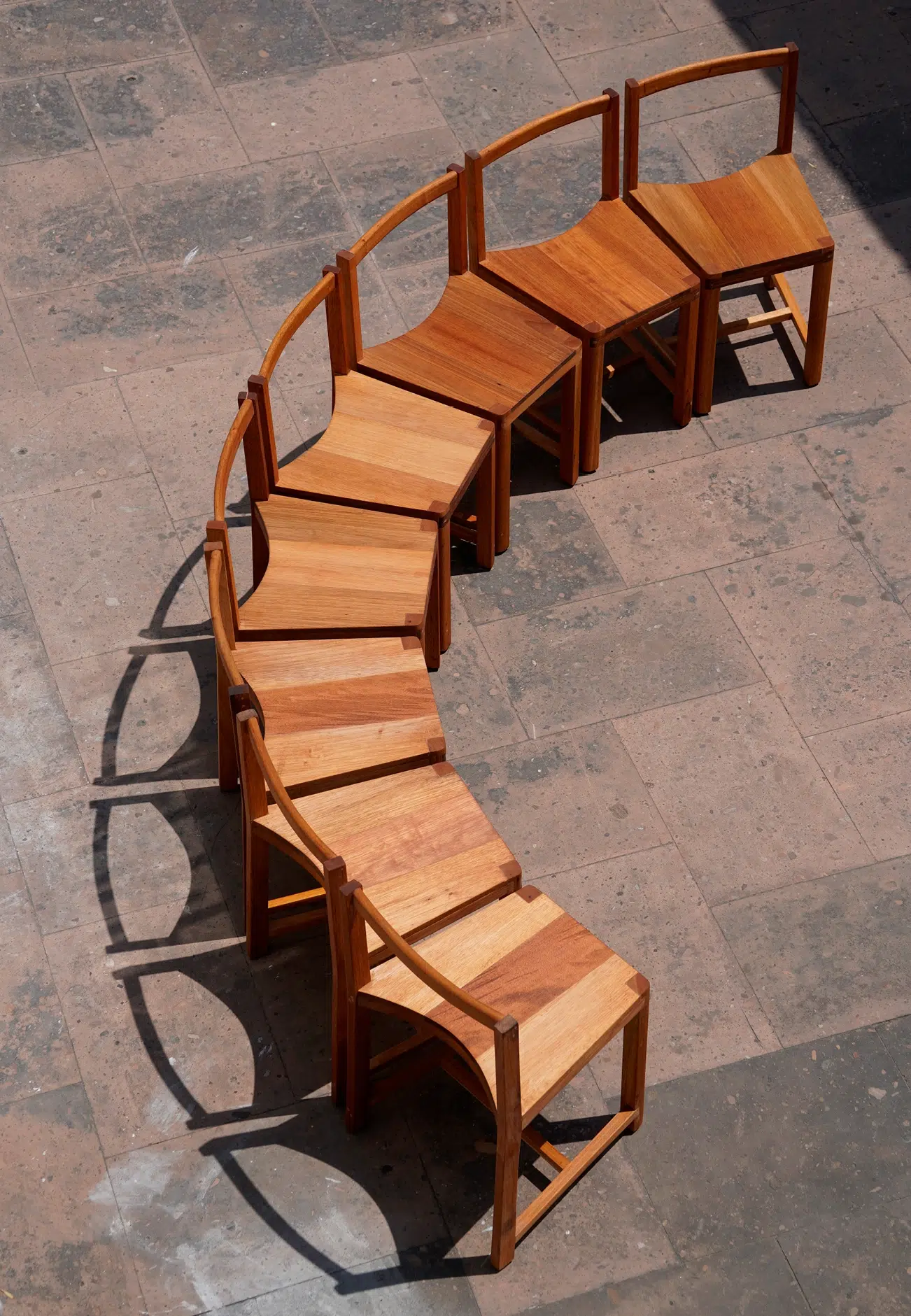
LANZA atelier, Chairs for 4 Couples Dining Set, 2020. Photo: Fernando Ocaña.
The pair had to work fast on their design: it went from concept to built structure in a year. You might think such speed would demand technology to expedite the process, but the Lanza way is resolutely analogue – hand-sketched drawings and hand-crafted 3D models first, always.
‘I think it was the fastest model we’ve ever done,’ says Alessandro, who can’t seem to help twiddling the piece of paper in front of him into a cylinder. ‘It’s always difficult to understand if an idea is worth developing, and because of our playful process, it’s easier to realise where to go.’
‘And by hand-drawing,’ adds Isabel, ‘we need to communicate with one another. I love to connect to concepts and words – and in this case, it was so powerful that we were doing a serpentine.’
Theirs is the 25th Serpentine Pavilion, a project that began in 2000 with Dame Zaha Hadid, and one that has long acted as a springboard for emerging talents – many of whom have gone on to become the biggest names in the industry.
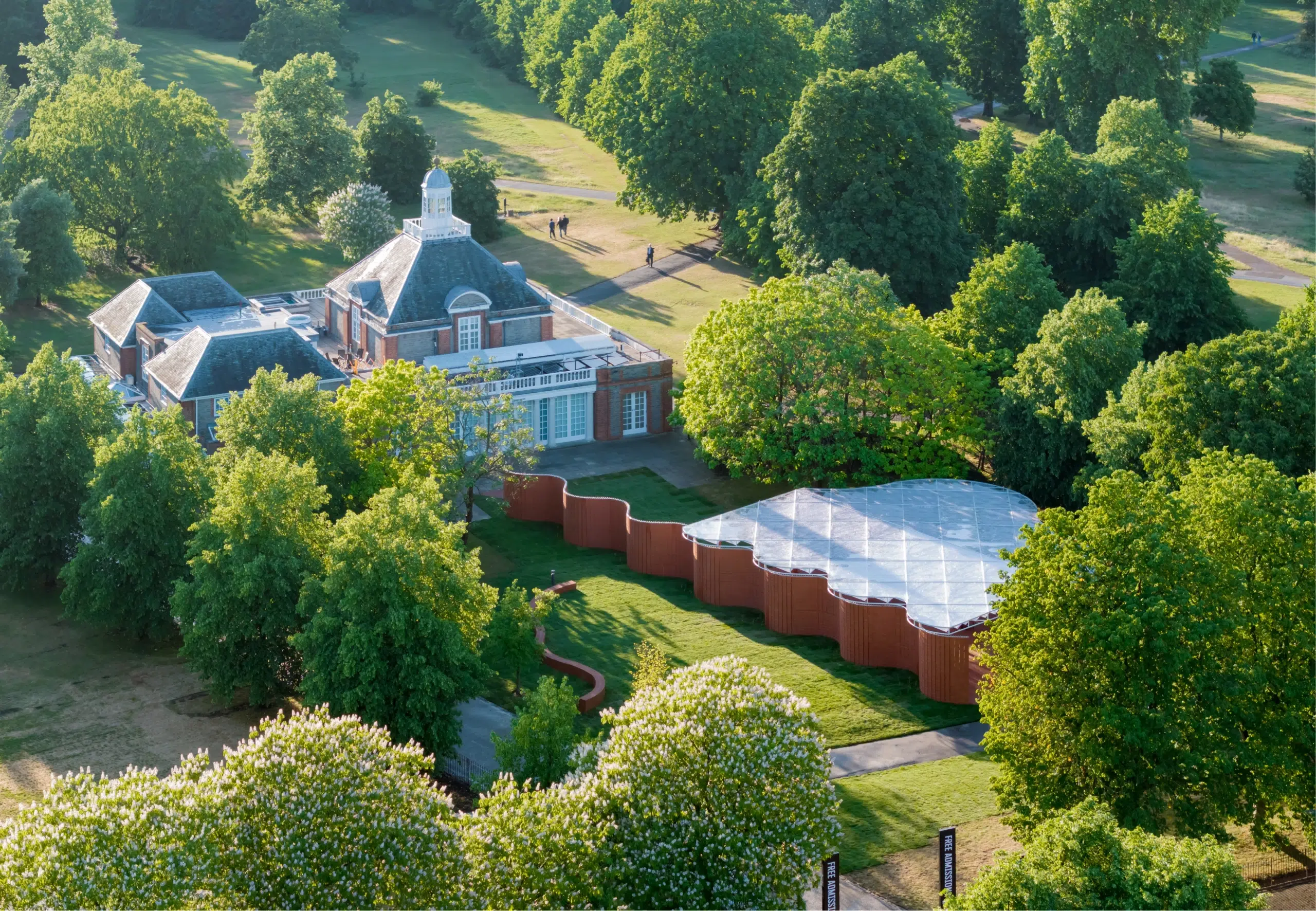
Serpentine Pavilion 2026 a serpentine, designed by Isabel Abascal and Alessandro Arienzo, LANZA atelier. Exterior view © LANZA atelier, Photo Iwan Baan, Courtesy Serpentine.
‘This is the second time we have had an architect from Mexico,’ says Hans Ulrich Obrist, artistic director at the Serpentine. ‘Eight years ago, we had Frida Escobedo, and then she won the Metropolitan Museum [of Art’s] competition… We’re very delighted that it can be a useful project for architects, and that we can make a contribution to making architecture more inclusive.’
By the time we wrap up, it is still raining, and the pavilion is still full. Which is, perhaps, the most architectural thing about it: that a wall – the oldest symbol of division there is – turns out to be exactly what brings people together.
The 2026 Serpentine Pavilion, “a serpentine”, will be at Serpentine South from 6 June-25 October; serpentinegalleries.org