


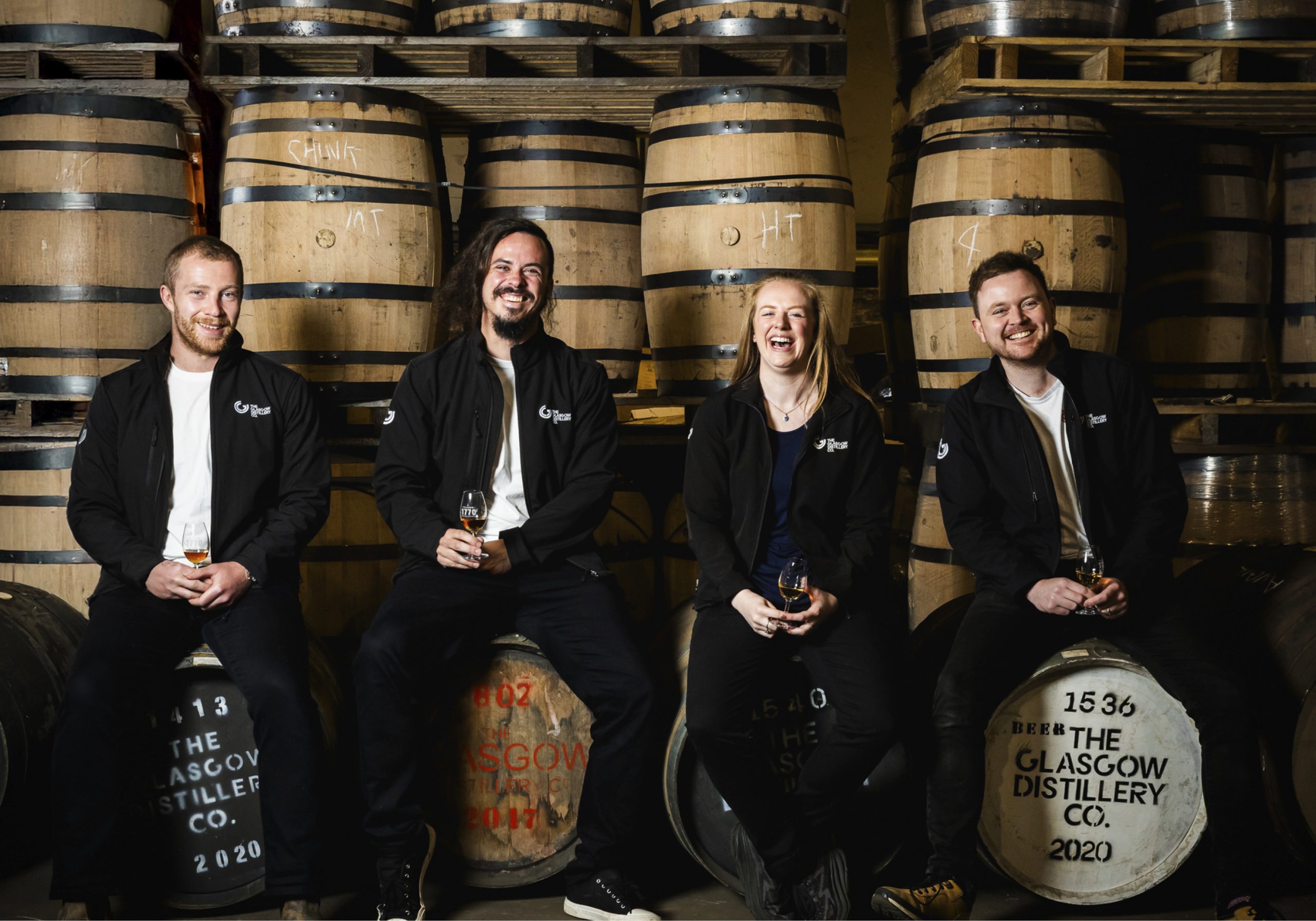
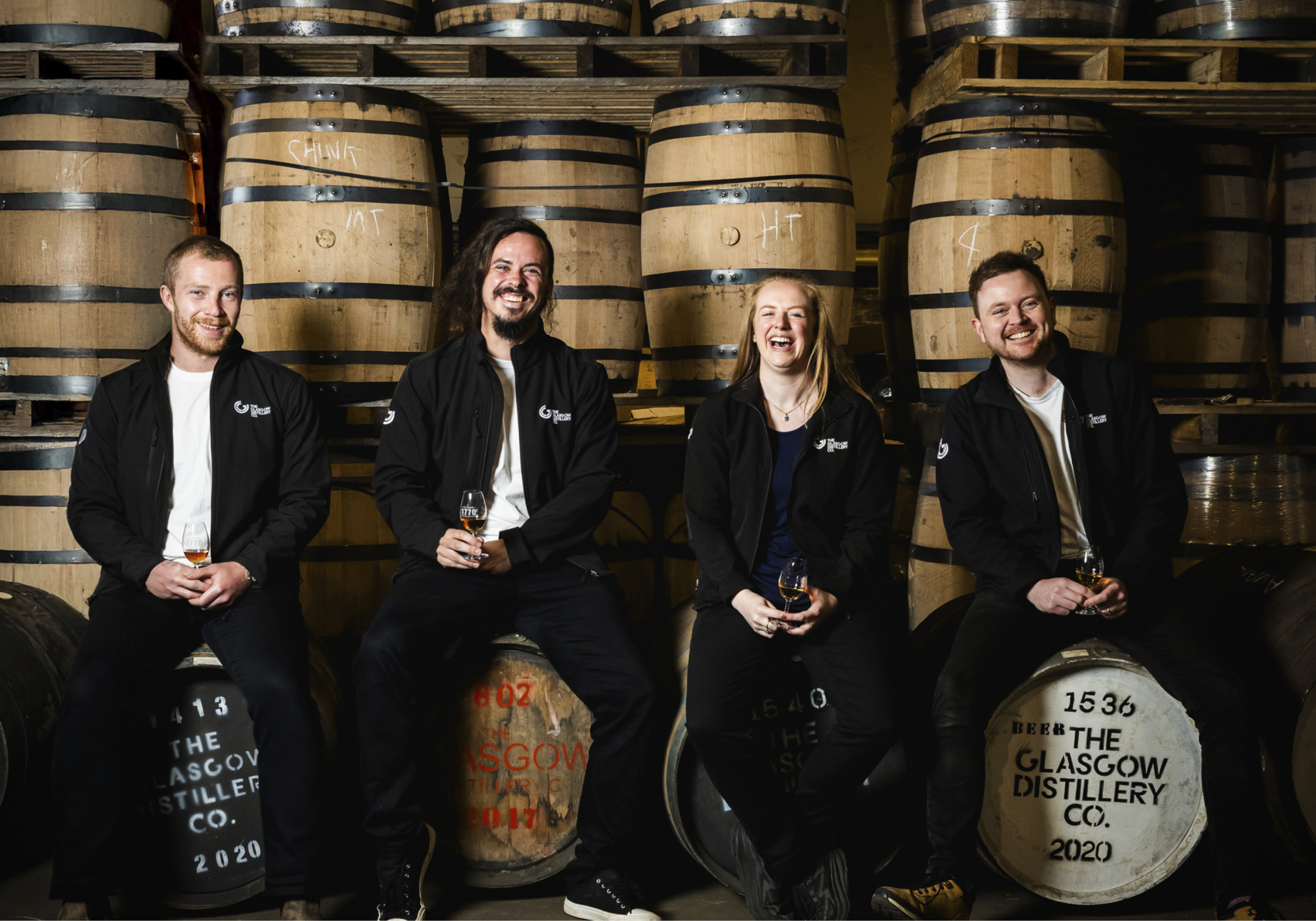
Scotch whisky has become so associated with a rural Caledonian idyll – all blooming heather, the skirl of the pipes and Highland “ coos ”– that the fact that it is essentially an industrial process often gets overlooked . Strange then, that there has never been much of a Glaswegian whisky industry… a flurry around the early 19th century, which fell away by the start of the next, leaving 100 years between openings of new single – malt distilleries.
It was 10 years ago that the first for a good while began producing whisky. The Glasgow Distillery took not only the name of one of the city’s first but also applied the date of its predecessor to its whiskies: 1770. This is not a desperate attempt to make a new distillery look older – the look and feel of the bottles are decidedly contemporary. Brand ambassador Libby Barmby says, ‘The old Glasgow Distillery produced different styles of distillate, so we are following that tradition. Our Original style is a very fruity, quite oily whisky with a lot of depth and complexity. Then we do a triple – distilled style – one of our founders is Irish – and that’s a light, vibrant, easy – drinking whisky. And there’s our peated style, which is rich and fruity with a gentle barbecue smoke to it.’
Glasgow sits, geographically, in the Lowland region, w hich is characterised as light and grassy in the s horthand of Scotch, but, says Barmby, ‘ We are breaking away from that and trying to make Glasgow’s whisky . I like the idea that, just as Glasgow is a very diverse city, we are making diverse whisky styles.’
The peated style is definitely a gateway drug to smoky whiskies. Using Aberdeenshire peat (largely formed by heather) rather than its more medicinal, seaweed – based Islay cousin, it has just a whiff of charred fruit and bonfire instead of full – on tyre fire , and ageing in Pedro Ximénez sweet sherry casks just adds to that sweet and smoky character.
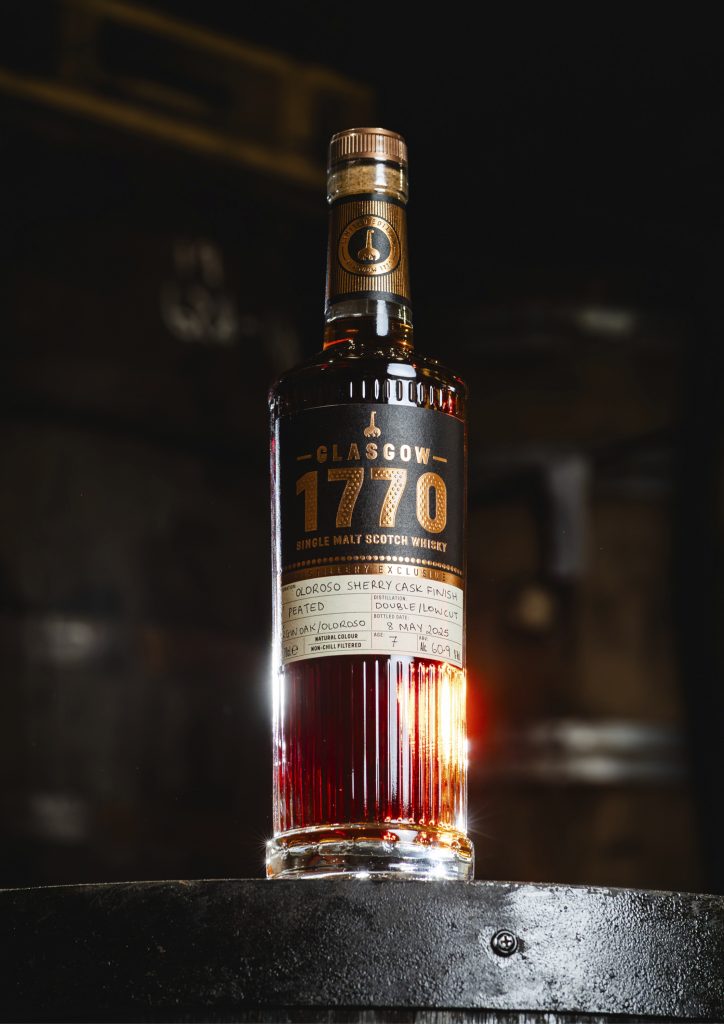
As well as the core range (from £45) , The Glasgow Distillery has small – batch bottlings (from £59) with specific wine finishes. I can recommend the Constantia finish ( sweet South African wine ), to the Original style .This has a really strong cereal core, wrapped in heather honey and dried apricots like a luxury muesli.
It is celebrating a decade of whisky production by bottling a series of 10YO whiskies. For the latest, The Glasgow Distillery has again gone with a dessert wine finish – this time a refill Sauternes barrique, so it’s a subtle influence, allowing the orchard and tropical fruit notes of the Original to take centre stage still, just matured and warmed by caramel, honey and a hint of baking spices. Another sign of the distillery’s maturity (and, indeed, growth) is that it has opened up for monthly tours. Details on the website.
The Glasgow Distillery 1770 10YO Sauternes Finish (£73.95) is available exclusively (and ironically) from Edinburgh’s Royal Mile Whiskies. More helpfully, it’s also online at royalmilewhiskies.com; glasgowdistillery.com
