


Andersen Genève’s new Split-Seconds Worldtime is unprecedented in watchmaking

The latest timepiece from independent maker Andersen Genève brings together two of watchmaking’s most complex mechanisms – the split-seconds chronograph and the worldtimer. The concept, first conceived by founder Svend Andersen and chief executive Pierre-Alexandre Aeschlimann in 2017, has been refined by the brand’s in-house team.
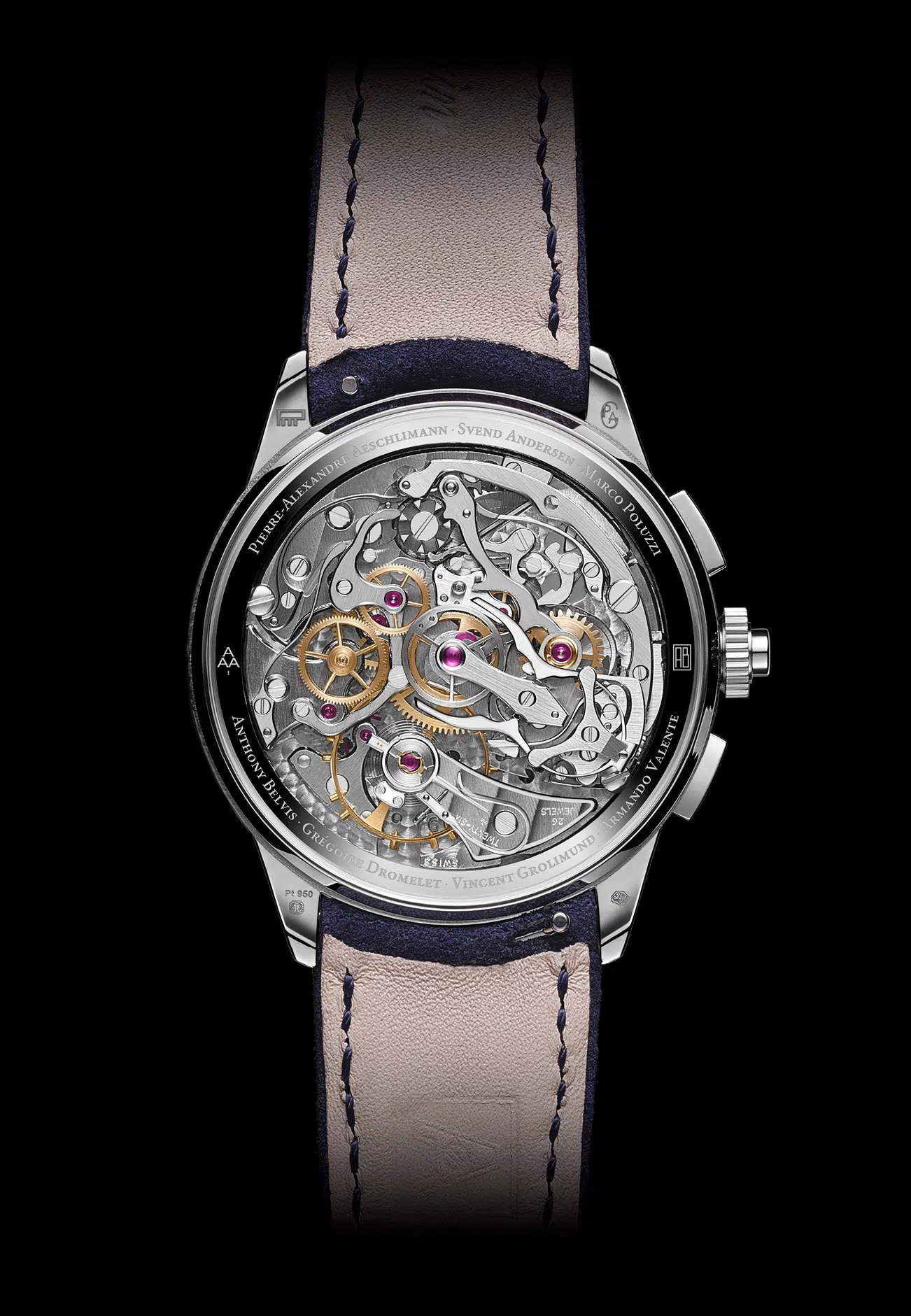
At the heart of the new Split-Seconds Worldtime lies the Venus 179 rattrapante movement, a hand-wound calibre from the ’40s restored and refined by Andersen’s watchmakers, paired with a new ultra-thin worldtime module. The combination, unprecedented in watchmaking, allows simultaneous measurement of elapsed times and multiple time zones without sacrificing balance or legibility.
Every element of the dial is executed to the same exacting standards. A vertically brushed white-gold central dial carries blue grand-feu enamel markings for the chronograph, surrounded by a 24-hour ring in silvered brass and a sapphire city disc denoting 24 time zones. City names are printed on the underside of the sapphire disc, set directly above the 24-hour ring. Day and night are distinguished by texture alone – mirror-polished for night, satin-finished for day – giving the display a quiet, shifting complexity under changing light.
The case has curved lugs and left-side pushers that allow the chronograph to be operated by the thumb. Inside, the movement is finished to Andersen Genève’s “AAA” standard – reserved for watches combining advanced complications with the most meticulous decorative work – with black-polished components, anglage and surfaces treated with pierre de Paris stone.
Limited to eight pieces, the Split-Seconds Worldtime continues Svend Andersen’s fascination with the worldtime complication – one that has shaped the brand’s identity since 1990 – capturing the quiet complexity and uncompromising detail at the heart of Andersen Genève.
POA; andersen-geneve.ch
