


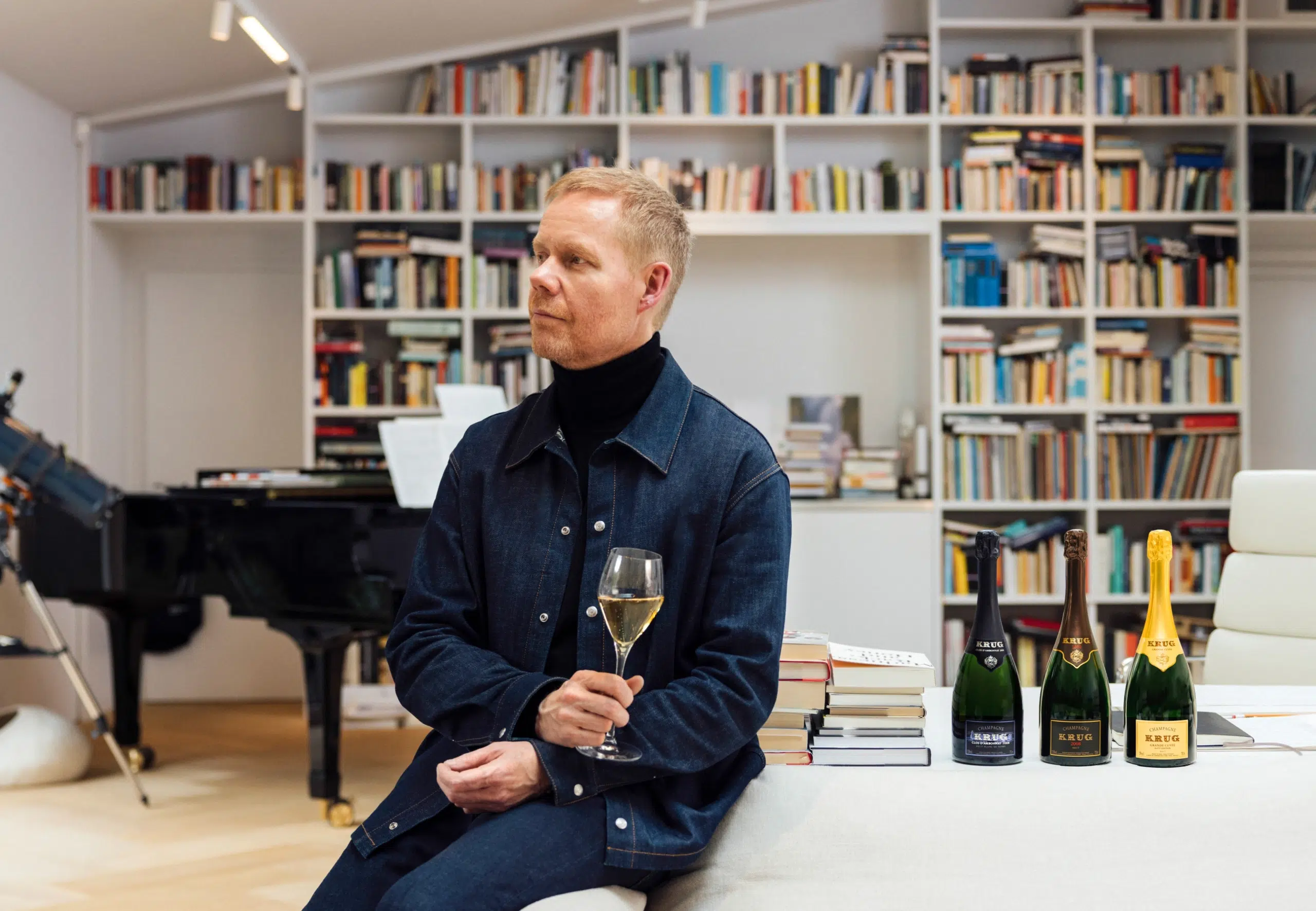
Oscar-nominated British composer Max Richter speaks to Brummell about turning champagne into music
German-born composer and pianist Max Richter is having a remarkable year. Alongside an Oscar nomination for his Hamnet score, the acclaimed musician has embarked on a singular collaboration with Maison Krug, translating the house’s celebrated cuvées into music.
Inspired by the outstanding 2008 vintage – praised as one of Champagne’s greatest in recent years – Richter created three compositions: Clarity for Krug Clos d’Ambonnay 2008, Ensemble for Krug 2008 and Sinfonia, an homage to the 127 wines behind Krug Grande Cuvée 164ème Édition. Here, Richter reflects on the surprising parallels between musical composition and winemaking.
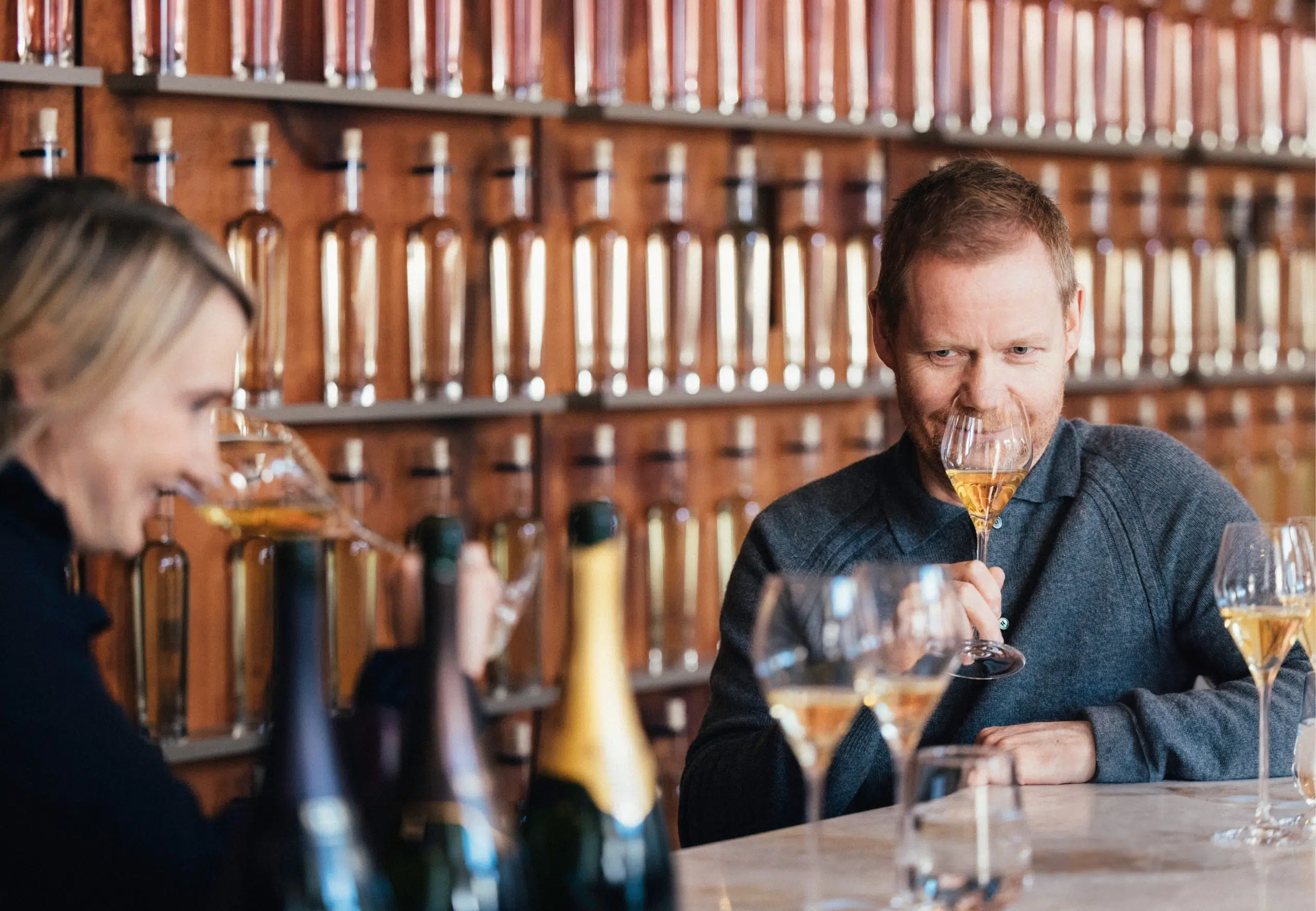
The languages of music and champagne share a surprising amount of common ground – time, craft, sensory feeling. What aspects of Krug’s winemaking philosophy or process surprised you most?
For me, one of the most striking aspects was the role that time plays – not only in the making of Krug champagne, but in champagne culture more broadly. When we visited the cellars, there were bottles there that were hundreds of years old. You realise it’s a cultural practice as much as a craft: an expression of people, place and time, all working towards something with extraordinary precision and intention. It is part science, part art.
There’s also a kind of classicism in that which I found deeply resonant. Musical languages evolve over centuries in much the same way. When I write a G minor chord, Bach wrote one, Mozart wrote one, Beethoven wrote one – yet each composer brings the sensibility of their own time to those same materials. I was very moved by that parallel and that became a very natural jumping-off point creatively.
When composing the three original pieces for this collaboration, what guided your creative process?
The light, the texture, the sense of time and the flavours all fed into the work. There’s something inherently multisensory about champagne, and I wanted the music to reflect that.
Compositionally, though, the process began with a very simple principle: the number of voices within each piece. The first movement is extremely intimate and focused. It begins with piano, joined only by two small solo lines in the strings, creating a kind of first-person dialogue. Then, gradually, the ensemble broadens. More lines appear, more instruments enter, and the sound-world expands. By the final movement, you arrive at the full orchestra. That progression gave me a clear architectural framework – a simple but effective way of thinking about scale as the music unfolded.
Finally, could you share a place that holds special meaning for you?
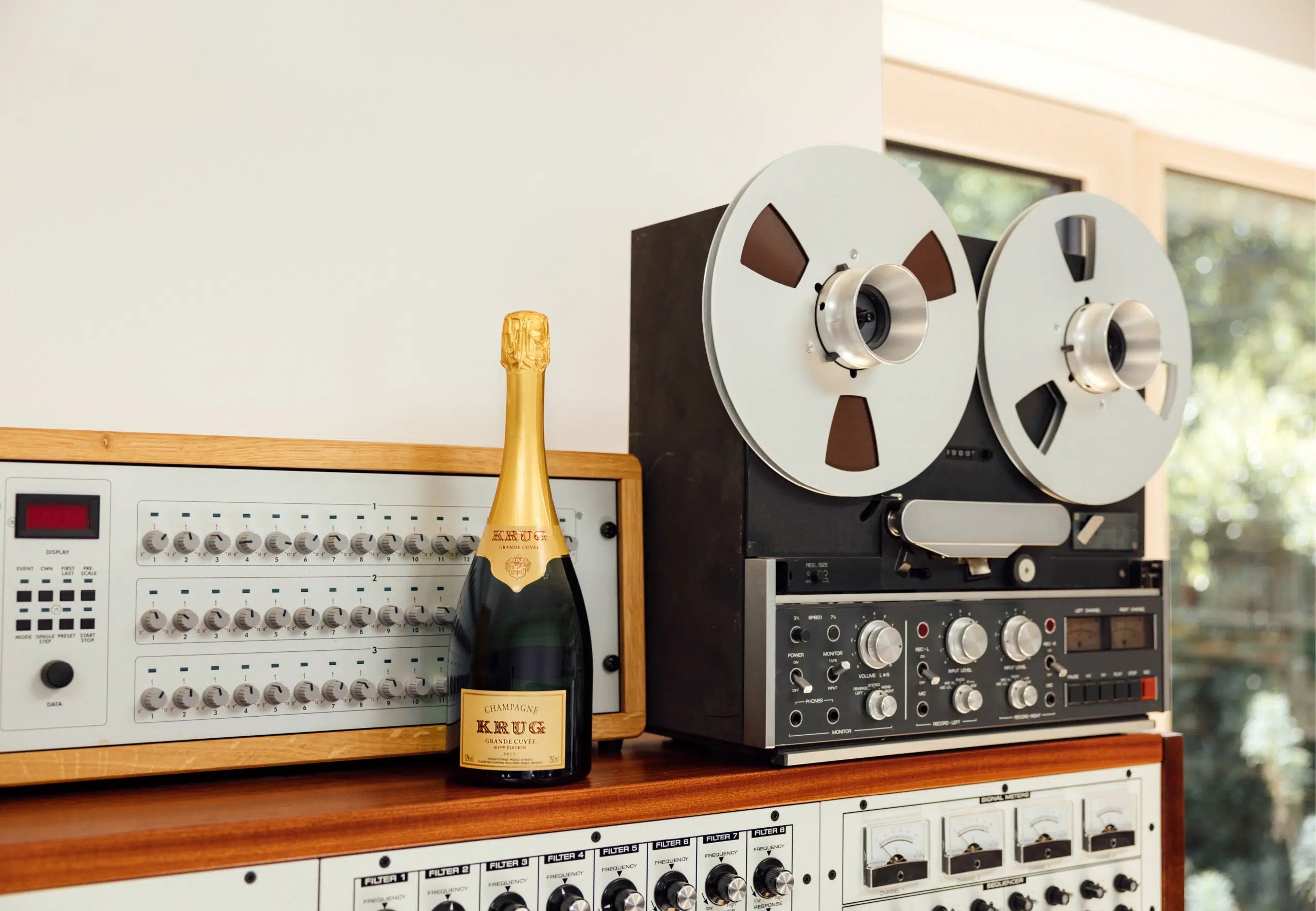
If I had to name a place where music feels most possible to me, it would be our home and studio in the Cotswolds – Studio Richter Mahr – where I live with Yulia Mahr, my partner. It’s a kind of laboratory, but one that exists in constant dialogue with the surrounding landscape. When we were younger artists, starting out without resources, we often longed for a space that could give us the time and freedom to explore ideas deeply and meaningfully. In many ways, this place is a response to that desire.
What matters to me here is the intersection between cognitive, artistic and technological work, balanced by direct access to nature – the woods, the landscape, the changing light. Creative people are often drawn to cities, but stepping outside that environment gives you a different perspective and a different tempo. Here, the tempo is slower. Very little happens – and that is precisely the point. It creates the kind of space in which the work can begin to ask its own, bigger questions.
Listen to Richter’s three musical pieces and discover the “Krug from Soloist to Orchestra in 2008, Act 2” offer, which presents the 2008 cuvées as a trio, on krug.com
