Playing fast and loose in the land of fire and ice
I’m mesmerised by a set of seductive lips. Plump, symmetrical, slightly parted and glistening as if recently licked, they’re inviting a matinee idol kiss. Sadly, it’s unrequited desire. The mouth is sculpted from dazzlingly clear ice and, peering through its come-hither pout, I glimpse glassy stalactite teeth guarding a sub-zero void.
Surreal sight. Surreal location. I’m standing underneath a massive crevasse inside Langjökull, Iceland’s second-largest glacier. Around 150kms outside Reykjavík, it smothers the western edge of the Highlands: a region providing scenic Viagra for Christopher Nolan’s summer’s blockbuster, The Odyssey. That alluring lip gloss? Melting ice.
Directly overhead, 30m above me, people can hike, ski or snowmobile across the compacted snow, blissfully unaware that a vast circular cave slices through the frozen landscape. A peachy destination during this new era of coolcations – temperate summer breaks in our overheating world – it’s just one highlight of a region blessed with hot springs, waterfalls and Viking history.
Whether Langjökull has the largest man-made ice cave on Earth is debatable – gargantuan military bases are rumoured to lurk under Greenland’s ice sheet – but who’s complaining? The photogenic 500m-long labyrinth is a serious feat of engineering, mixing glacial scientists’ expertise with local farmers’ muscle.
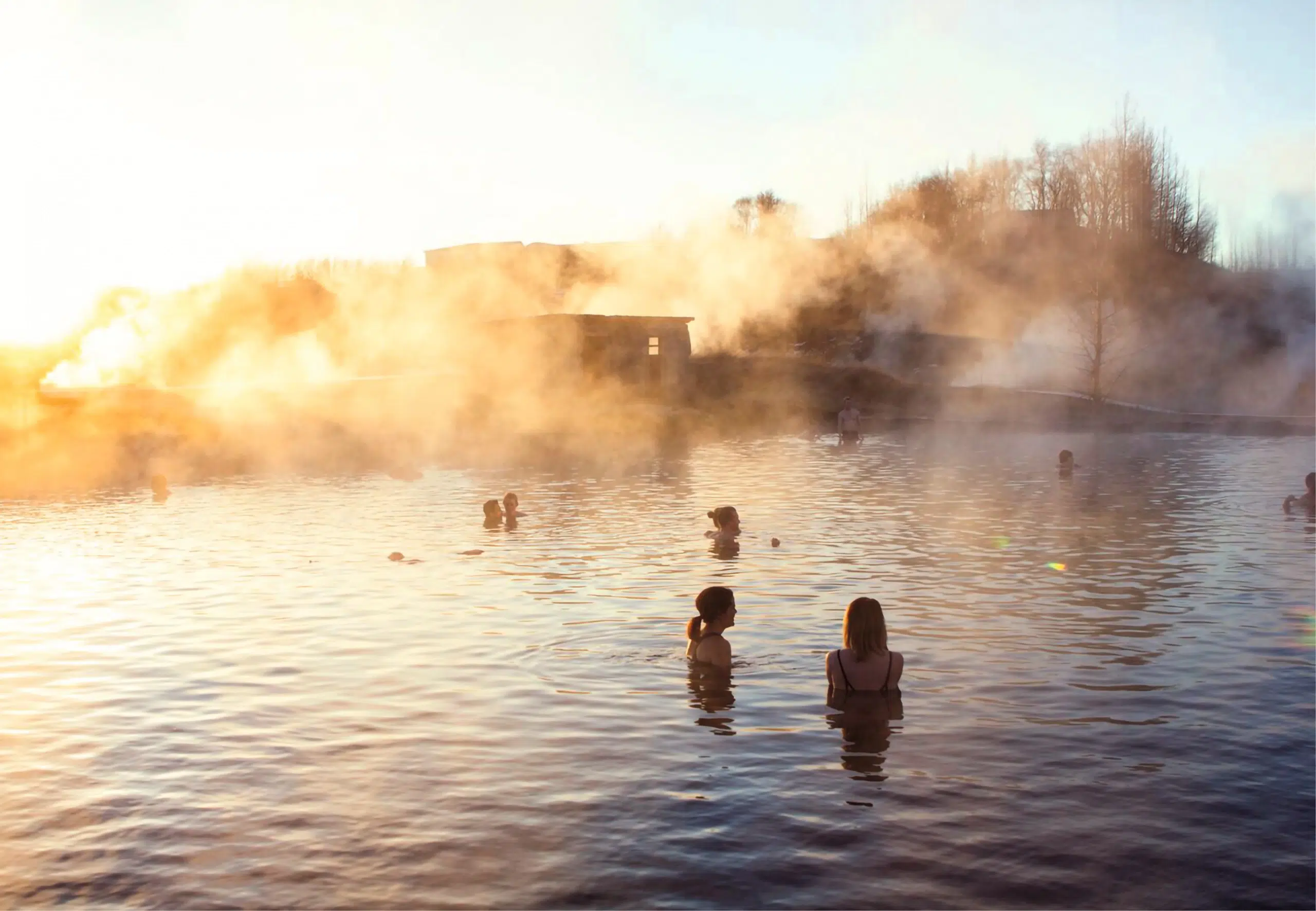
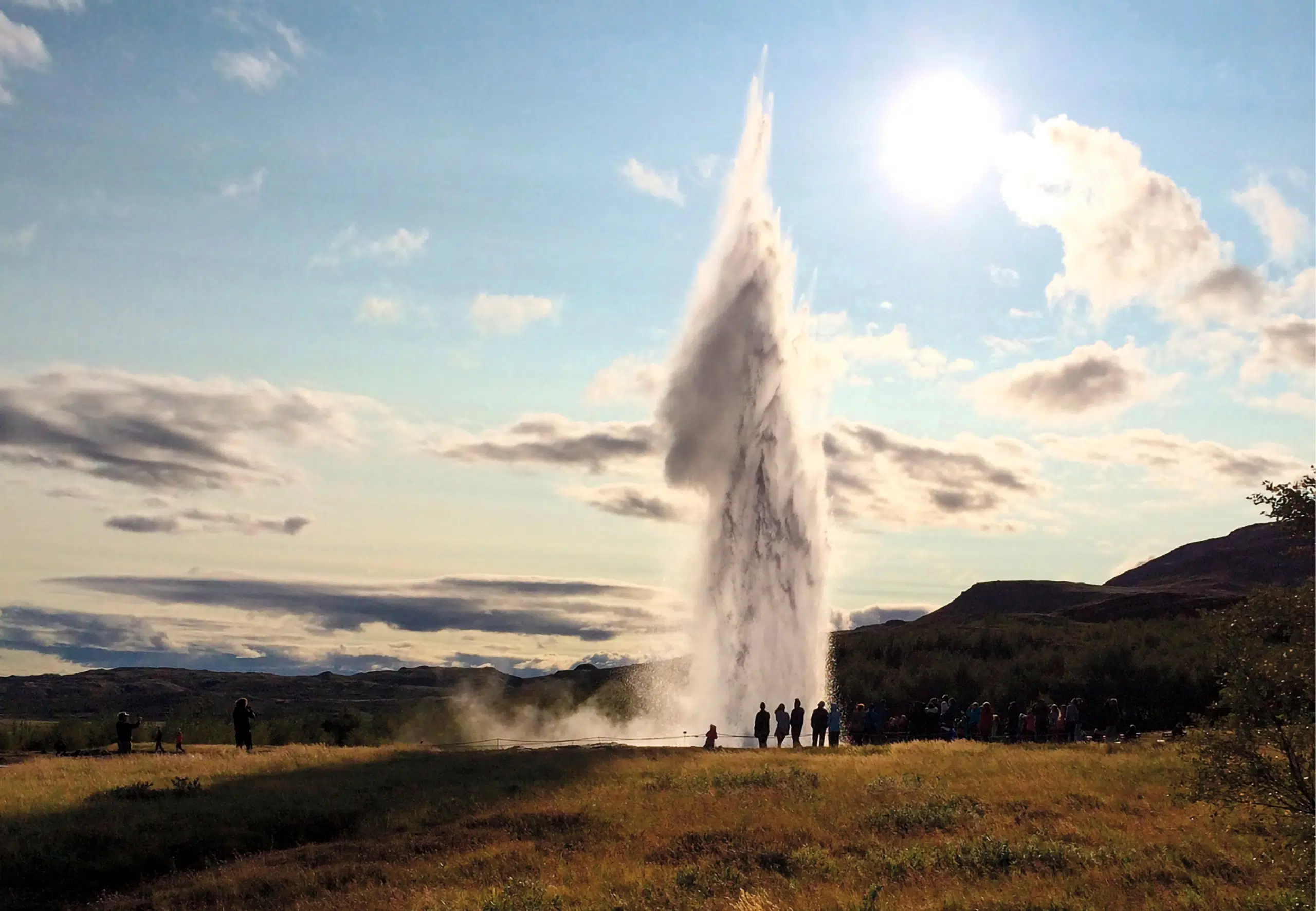
Bathers in Gamla Laugin; a geyser erupts
It also adheres to the timeworn adage that travel is about the journey as well as the destination. I start on black volcanic rock, clambering up into a monster truck: a Nato cruise missile transporter pimped to carry 38 people up the glacier. Once we reach Langjökull, its eight enormous tyres deflate to just 10 pounds per square inch for traction, spreading the load so the 30-tonne truck touches the ice with less weight than a walking man.
‘I have 48 gears to choose from,’ announces Arngrímur “Addi” Hermannsson, who’s well versed in driving across frozen polar terrain. ‘It’s difficult to pick the right one. Fresh snow. Are we stuck? Yes, we are.’ Addi would have made a fabulous Fast Show character. ‘You must be gentle and slow,’ he coos, ‘as if you have a lady in your hands.’
At an altitude of 1,260m, we park, dismount and attach crampons, entering what appears to be an old mine working. A 100m passage reveals the circular cave. As with a tree trunk’s age rings, each subtly different band of ice tells the story of that year’s snowfall. A narrow dark line contains ash from the notorious Eyjafjallajökull volcanic eruption of 2010. I can’t pronounce it. I can’t forget it. The ensuing flight carnage left me stranded in Egypt.
Heading deeper into the labyrinth, its walls reflect the greater weight above, with air bubbles gradually squeezed out of the ice. Approaching the deepest point, concealed LED lights give its translucent surface a serene blue glow, suggesting an upmarket spa’s sub-zero therapy room.
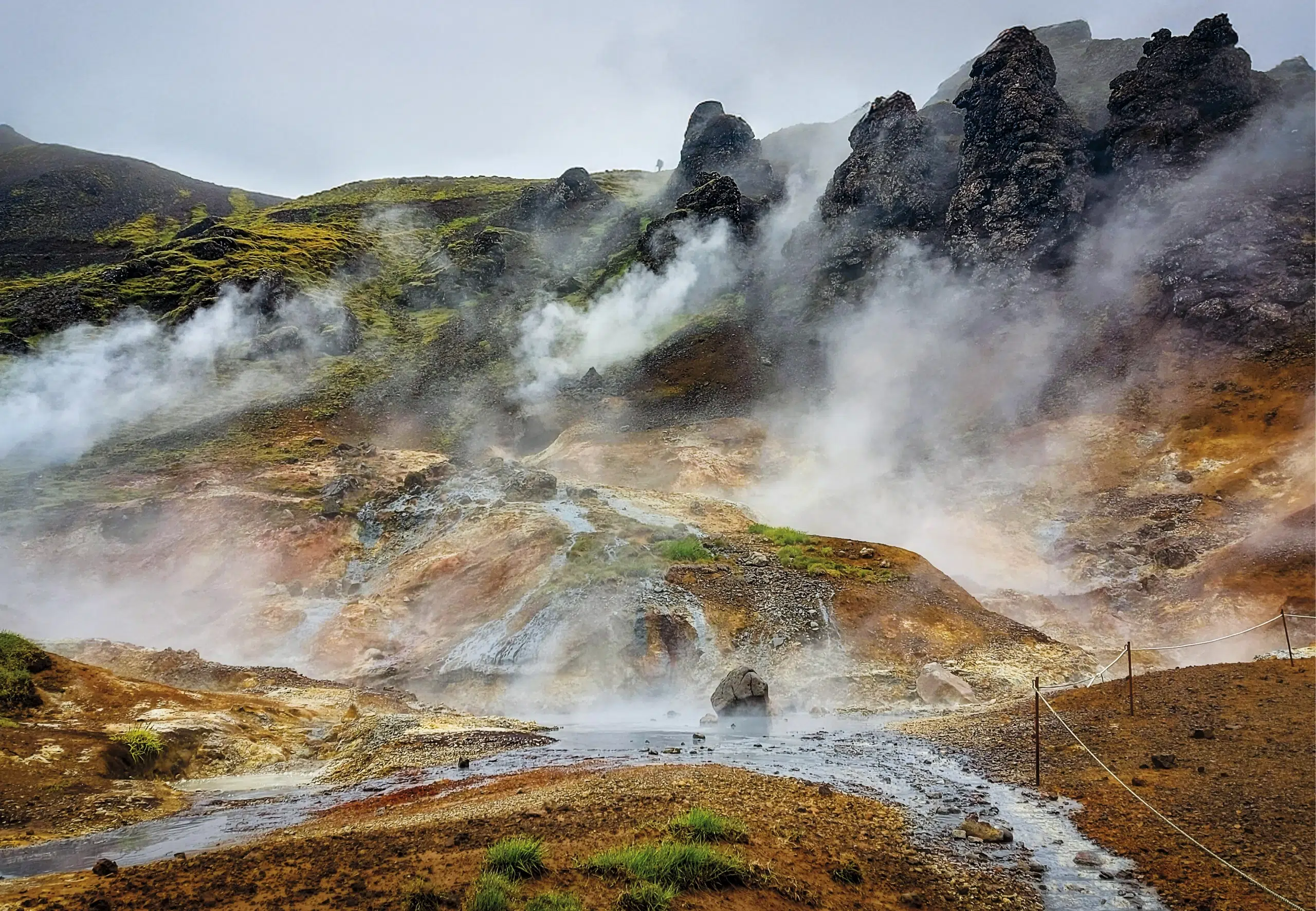
The landscape is punctuated with dark volcanic rock
Yet in an age when many of us have seen an ice hotel’s ethereal chapels and bars, or witnessed toothpaste-blue icebergs, the cave’s illuminated interiors have lost some of their cachet. Instead, it’s the vast crevasse – 300m long, 5m wide – that makes jaws drop.
As a moving ice cap, Langjökull’s features evolve and change from year to year. I’m fortunate to get three different perspectives of the crevasse and it’s never less than mesmerising: a vast gaping mouth whose eerie shadows, vicious stalactites and tortured clumps of ancient snow conjure up a Victorian artist’s vision of Hades. Each view, usually reserved for mountaineers who’ve fallen through the ice, is worth the entry price alone.
After silently contemplating the abyss, I exit the cave, blinking in brittle sunlight. It’s no less spectacular outside. To the north lies the giant cream dome of Eiríksjökull and cone-shaped Mt Strútur; to the south the side glacier of Geitlandsjökull. Between them Langjökull’s bright white face, sprinkled with kite skiers, descends to a bleak dark lava field beneath west coast mountains.
The Golden Circle
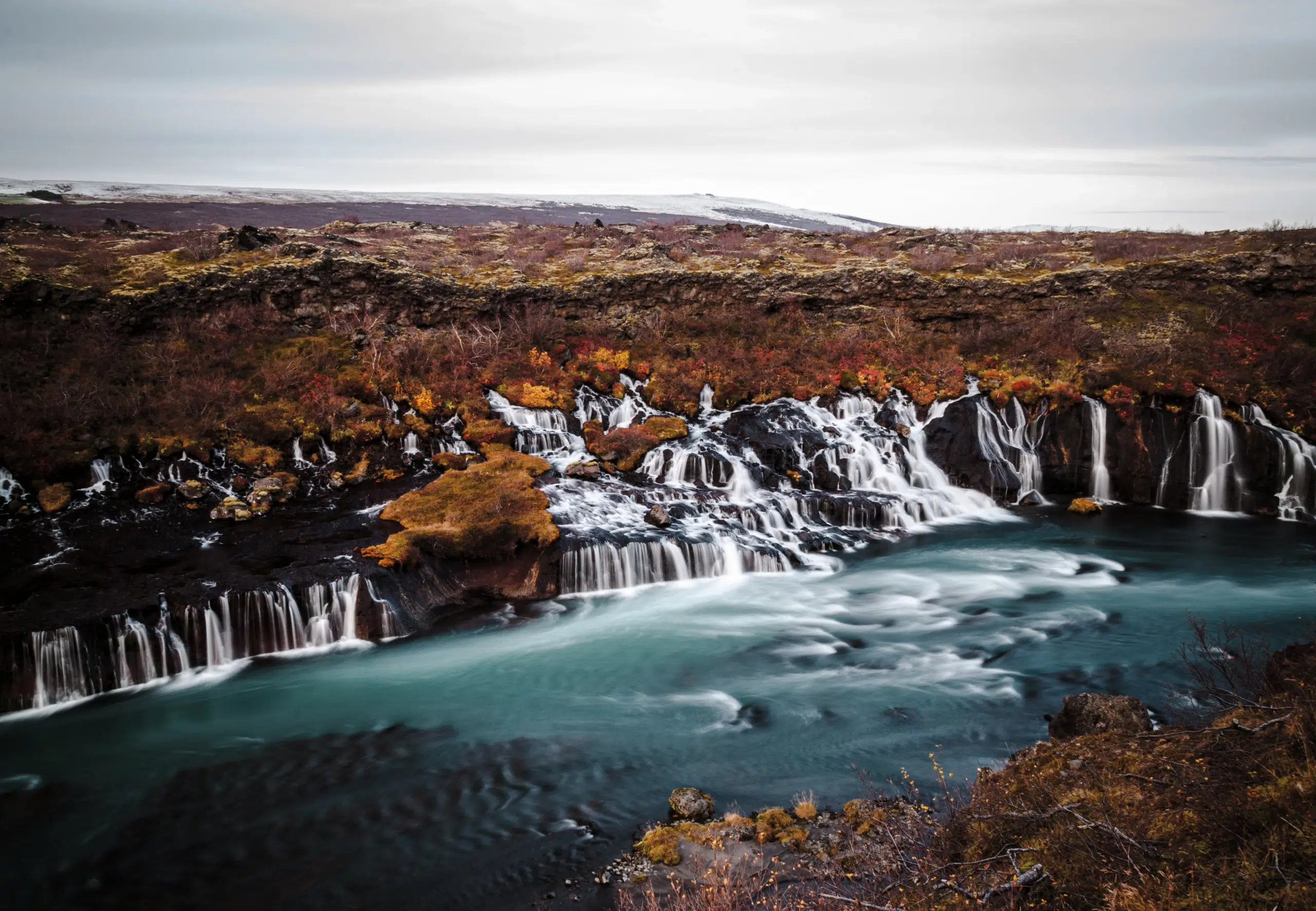
And the ice cap isn’t finished with me yet. En route to Reykjavík I visit two waterfalls: Hraunfossar’s wall of cascading streams and the muscular deluge of Barnafoss, both fed by Langjökull’s meltwater. Each juxtaposes a frothing turquoise flow with brooding volcanic rock. Have your camera ready.
Iceland, however, is about more than the white stuff. It’s also a land of fire and geothermal wonders. I join a helicopter flight across the ochre and coal-black landscape towards pillars of smoke rising from the earth, 45km east of the capital.
In soupy, sulphurous air, we land on the powdery clay of Hengill, a volcano that last erupted 2,000 years ago. Around us the streams are a tempting 40°C, the steam vents a toastier 70°C. Three thousand metres underground, the pressurised water reaches 300°C.
For visitors, Hengill’s an intriguing holiday snap, whose subterranean rumblings helpfully warm Reykjadalur Valley’s bathing river. For locals, it’s sustainable energy. They harness its steam to drive electricity-generating turbines. ‘Iceland has fish, power and a few tourists,’ explains my pilot Jon Björnsson, who flies Hollywood luminaries from Tom Cruise to Matthew McConaughey around the country’s photogenic filming locations. ‘We’re OK.
How true. Icelanders do seem incredibly relaxed. Their prolific opportunities for thermal dips surely help. On my final night I kick back at Gamla Laugin [or the Secret Lagoon], the country’s oldest swimming pool, 100km outside Reykjavík: a venue where practicality trumps fashion. Having strapped brightly coloured buoyancy devices to my arms and head – a look rarely seen on the Côte d’Azur – I ease into the 38°C water.
A geyser splutters and hisses in the surrounding darkness. Sigur Rós drifts from floating speakers. I lie back and contemplate the night sky through swirling steam as snowflakes tickle my eyelids. It’s tranquil, hypnotic, otherworldly, as dreamlike and Dalí-esque as those moist glacial Langjökull lips.
Seven nights in Iceland including Langjökull, Hengill and Gamla Laugin, alongside the Snaefellsnes Peninsula, Thingvellir National Park and Reykjadalur Valley, from £5,299, excluding flights; yellowwoodadventures.com