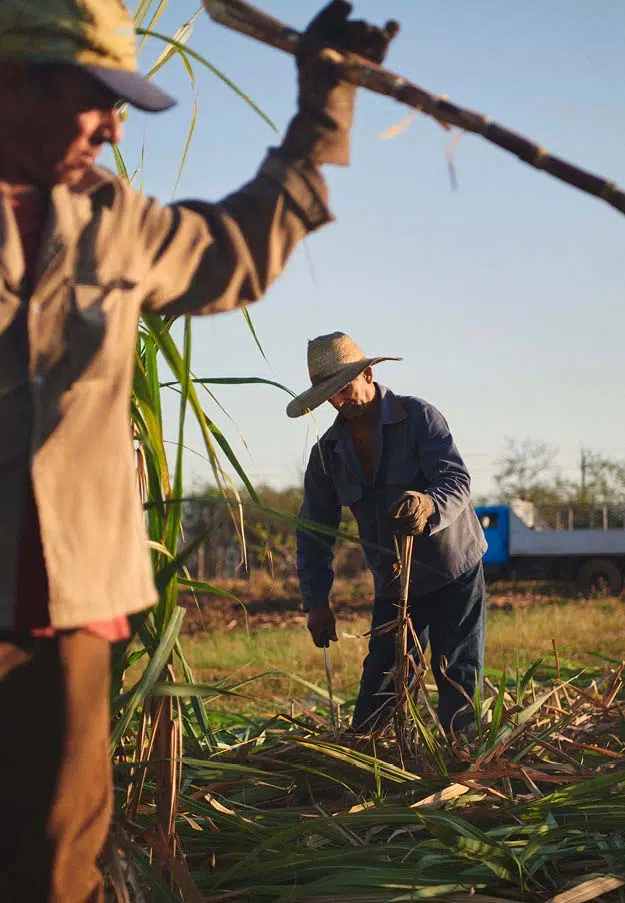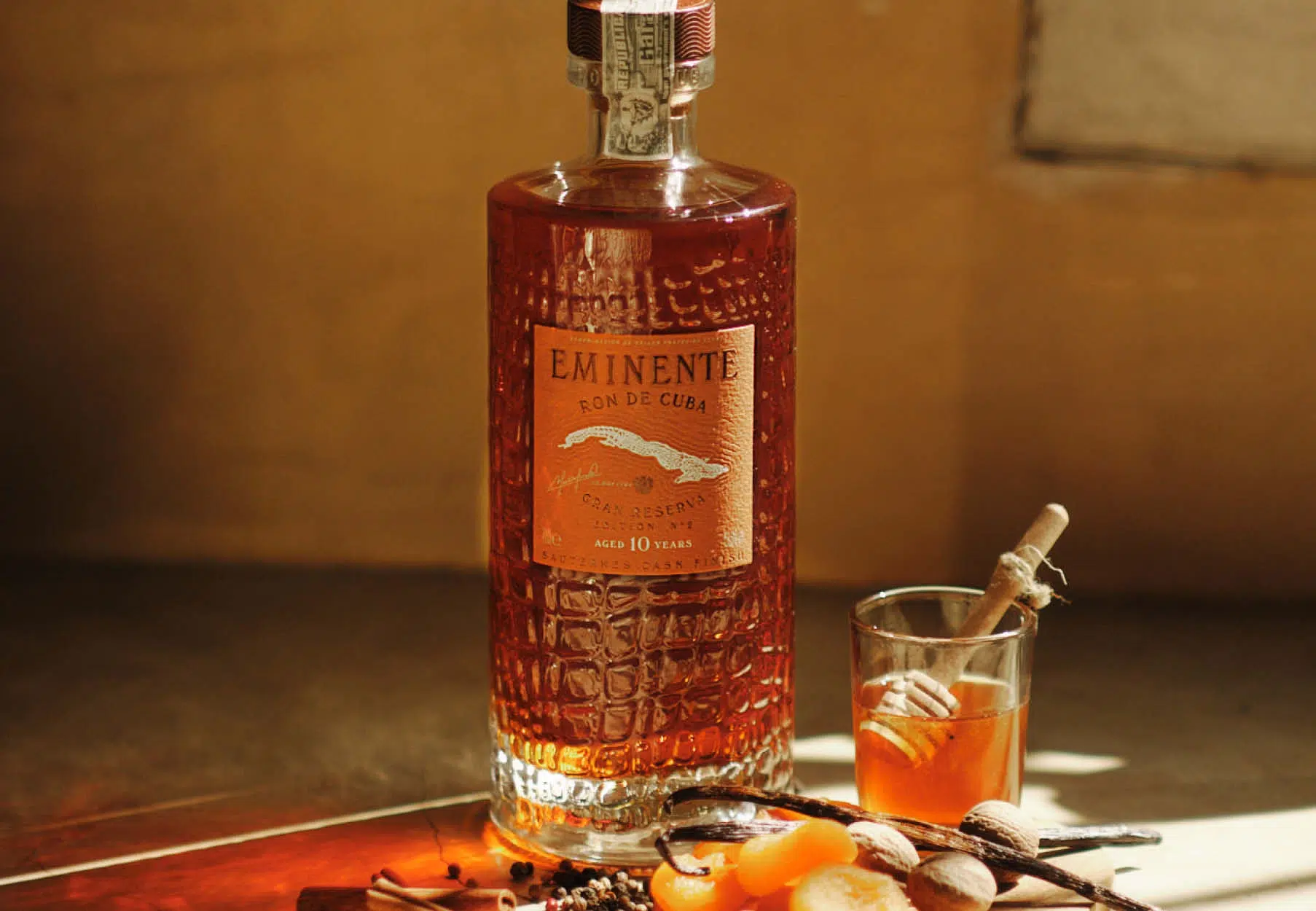
Eminente’s new Sauternes-finished Gran Reserva is like someone arriving at a party wearing black tie and combat boots – elegance with an edge
César Martí was the youngest officially named master rum-maker in Cuba (they have a committee to decide such things) but, with Eminente, he has reintroduced an old style of rum. You might expect a brand owned by the LVMH group to be the most polished version it could be, but what Martí did was bring a touch of raw wildness back to the Cuban spirit.
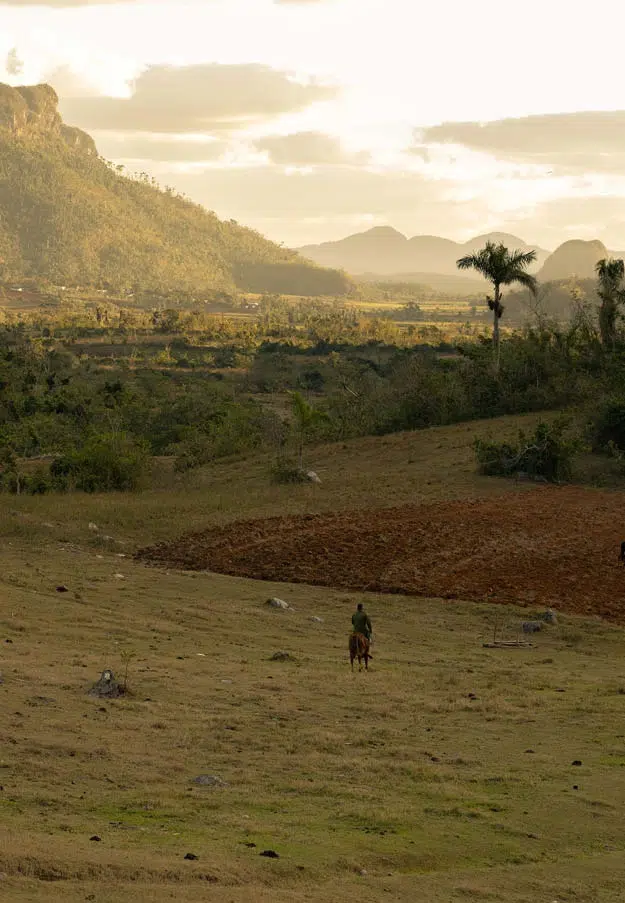
The maestro roñero grew up in Villa Clara province in the centre of the Caribbean island. Martí says: ‘I remember being surrounded by a green sea – it was cane fields for as far as I could see… Cuba is known as the green lung of the Western world, and it is a wonderful, natural place – we have over 3,000 species of flora and fauna that live only in Cuba.
‘Among the plants, though, are 120 types of sugar cane, 70 of which are only found in Cuba. I would often visit the sugar mill where my grandfather worked. And the conversation at home was always about cane and molasses and distillation!’
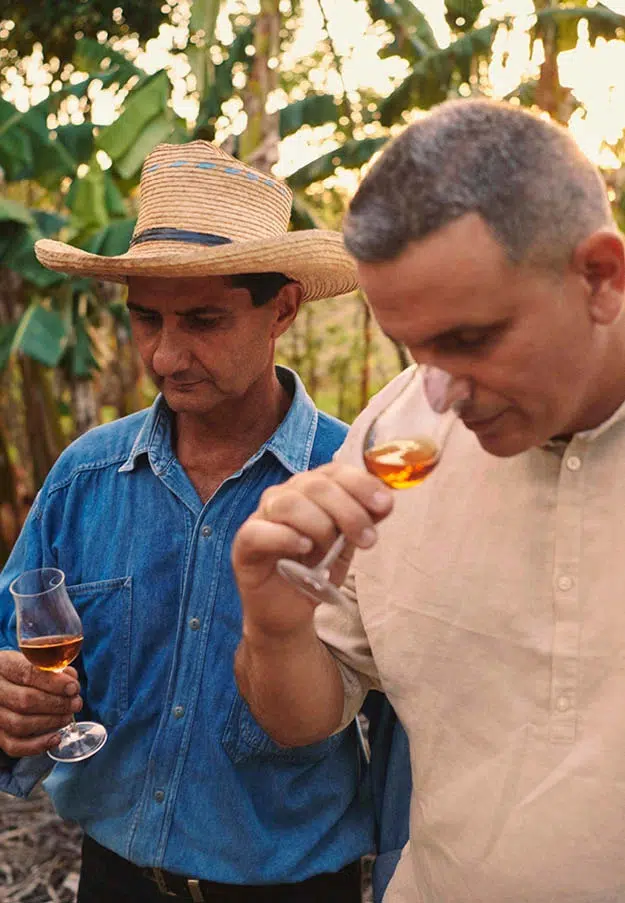
Martí studied chemistry at school and the two strands of his upbringing led to a job with Corporación Cuba Ron, the nationalised collective of distilleries with whom the European companies work on joint ventures (Pernod Ricard for Havana Club in the north-west; Diageo for Ron Santiago in the south-east). At the Villa Clara distillery, Martí began working on two ideas that have come together in Eminente.
After a short fermentation, the molasses is run through column stills. At first, it produces aguardiente (literally “firewater”). But that’s not because it is high proof, Martí explains: ‘It comes out from the column at 75 per cent alcohol by volume. That means it is very aromatic, very complex, very rich. A portion of the aguardiente is run through the columns again to produce redistillado. That comes out from the still at 95 per cent ABV, and it brings something versatile, subtle – very light.’
It’s the age-old trade-off between purity (like a vodka rectified to high ethanol levels) and retaining congeners, esters and other flavourful compounds, in a mezcal or whisky. Before the 19th-century invention of column stills with multiple mini-distillations occurring as the vapour travels up from plate to plate, rum was aguardiente. The reputed first cocktail (a proto-mojito administered on Sir Francis Drake’s ship as a cure for dysentery and scurvy) was made with that one-distillation firewater.
Nowadays, most Cuban rums blend the two liquids, but generally with about 20 per cent aguardiente. Eminente contains about 70 per cent, with the Gran Reserva rising to 80 per cent.
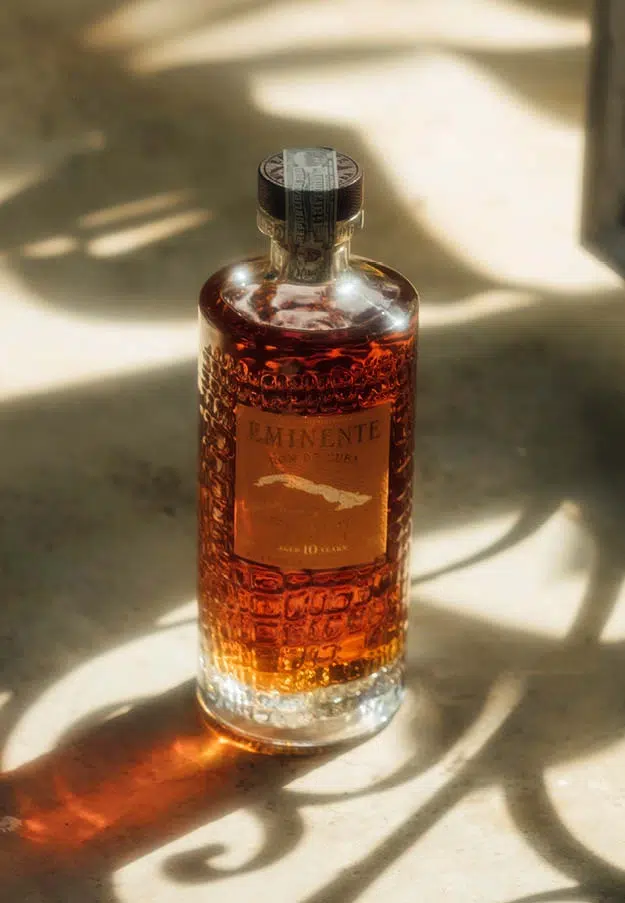
Eminente bottles are contoured like a crocodile hide. That is a tribute to the endangered crocodilo cubano, part of the unique fauna on the island. It also serves as a metaphor for Martí’s style of rum. It has texture while maintaining smoothness; just a little feeling of wildness. It’s not the challenging diesel fumes or overripe banana of high-ester Jamaican marques, especially at the approachable bottling strength, but it does have a little funk and scratch.
It will still appeal to someone used to aged Havana Clubs because of the second area the maestro roñero has explored: the subtleties of maturation. Martí’s thesis was on the effect of different casks on different blends of rum and it was his work on this that led to him being elected primo maestro by the other maestros roñeros.
The latest limited-edition release, Eminente Gran Reserva Edition No.2 (43.2% ABV) is a prime example of this. After nearly a decade of “ageing, blending, ageing, blending, ageing…”, this 10-year-old rum spent four months in an ex-Sauternes wine cask. The chateau that it came from has not been declared, but the first Sauternes you might think of is owned by LVMH, so speculation is hard to resist. (Edition No.1 was French oak-finished and, again, Moët Hennessy did not declare which cognac house it got that from.)
Whatever the truth about the cask sources, the Cuban certainly has access to excellent wood to finesse his rums. This combination of elegance and bite works very well. On the nose, there is coffee and tobacco, along with tropical fruit and caramel sauce; on the palate, a strong apricot-led stone-fruit character, candied peel and a lingering finish with those little wild nibbles – peppercorn, dry bark spices. It can be food-paired like a Sauternes (foie gras, blue cheese) and works in an old fashioned, as well as au naturel.